
Ross B Confused. Still.
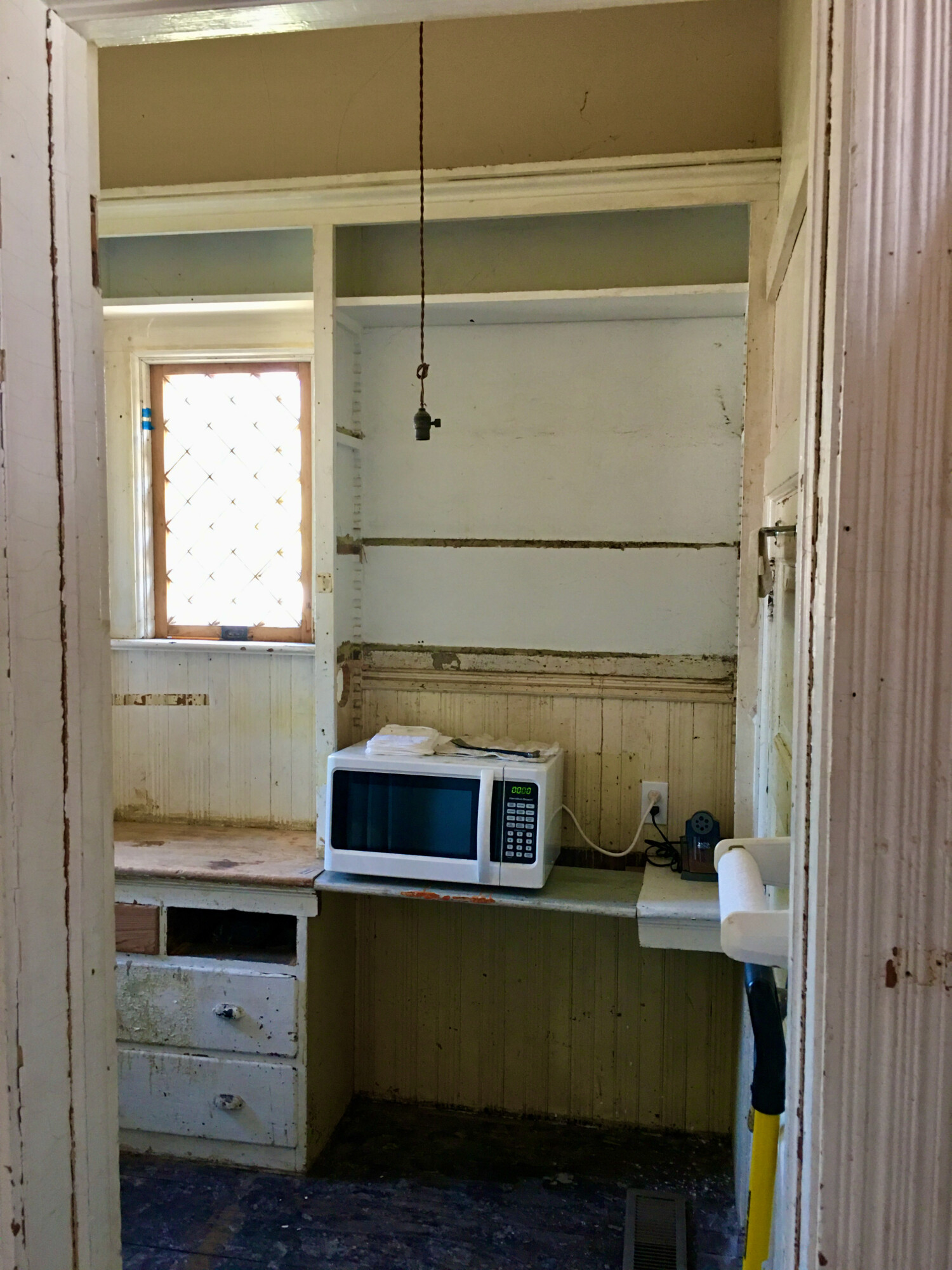
The main pantry in the Cross House. I have now removed three shelves. The missing drawer is in the basement.
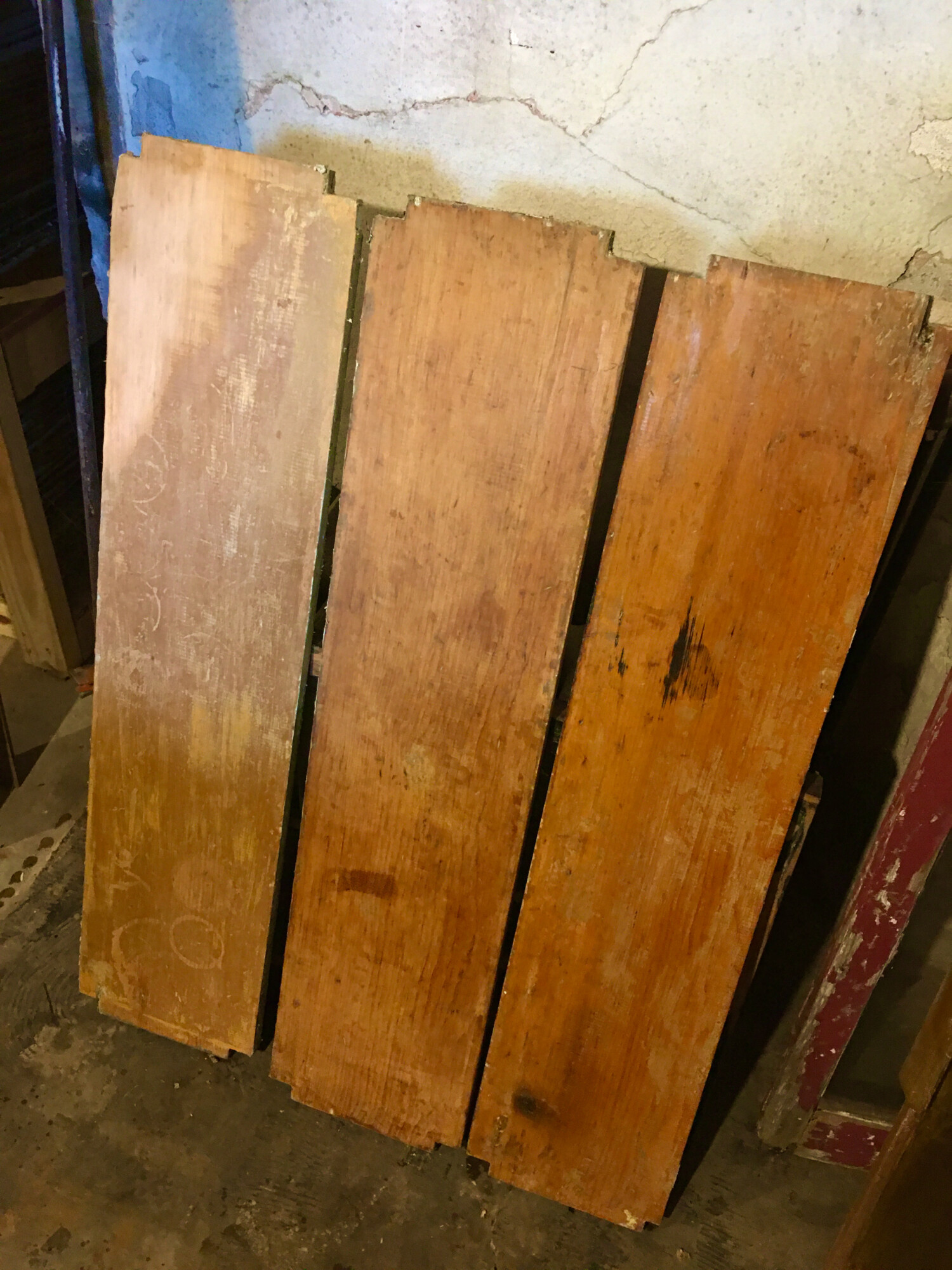
I have previously written about shelves #1 and #2. Well, the top of shelf #3 (right) also has a shellacked original finish, as does the top of shelf #2 (middle). Shelf #1 (left) has a faux bois finish.
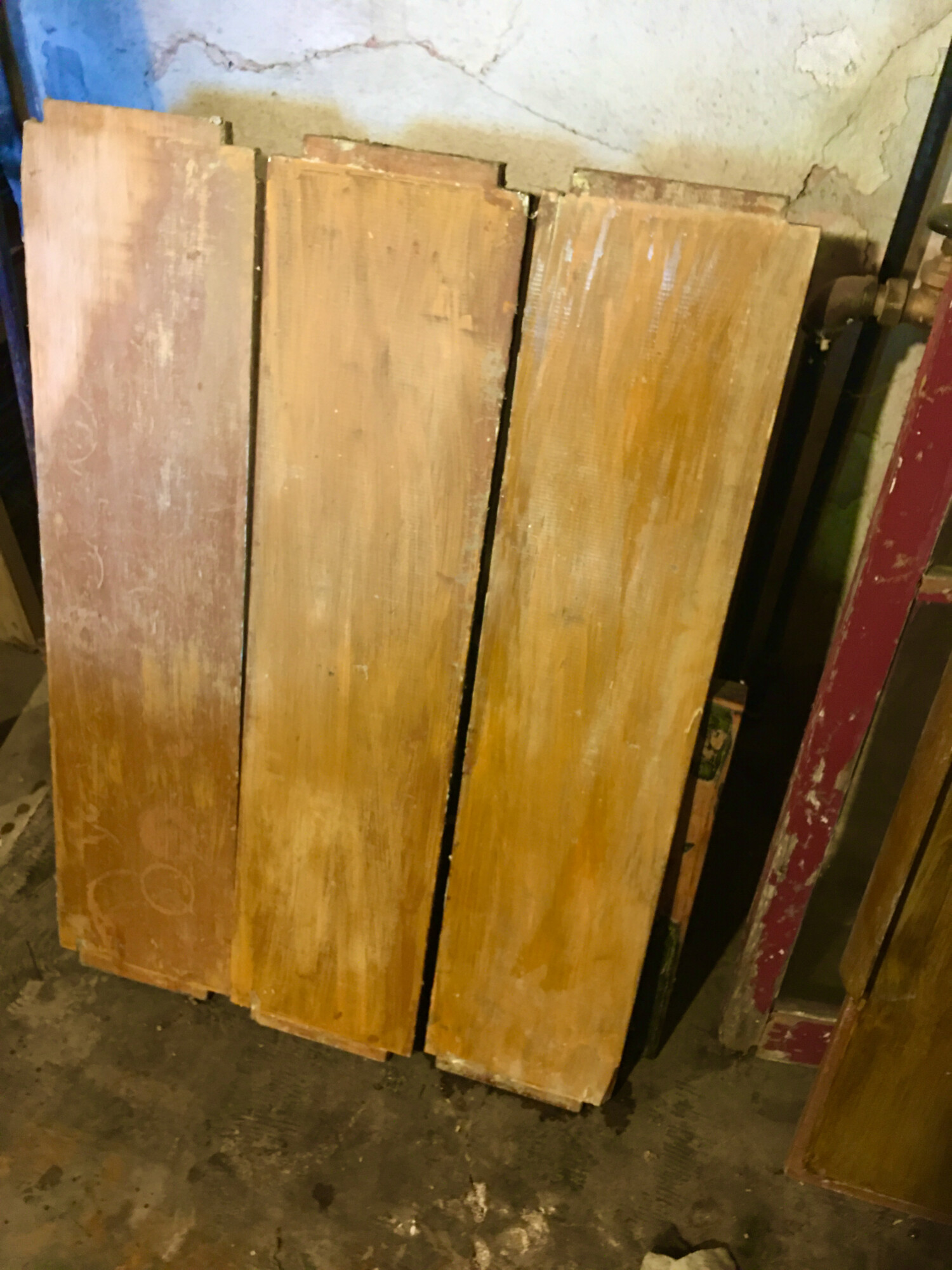
However, if you turn #2 and #3 over, their bottoms have a faux bois finish. So, at this point, it seems that what one could SEE had a faux bois finish. And, if one could not see the top of a shelf? Just plain ol’ shellac was deemed OK.
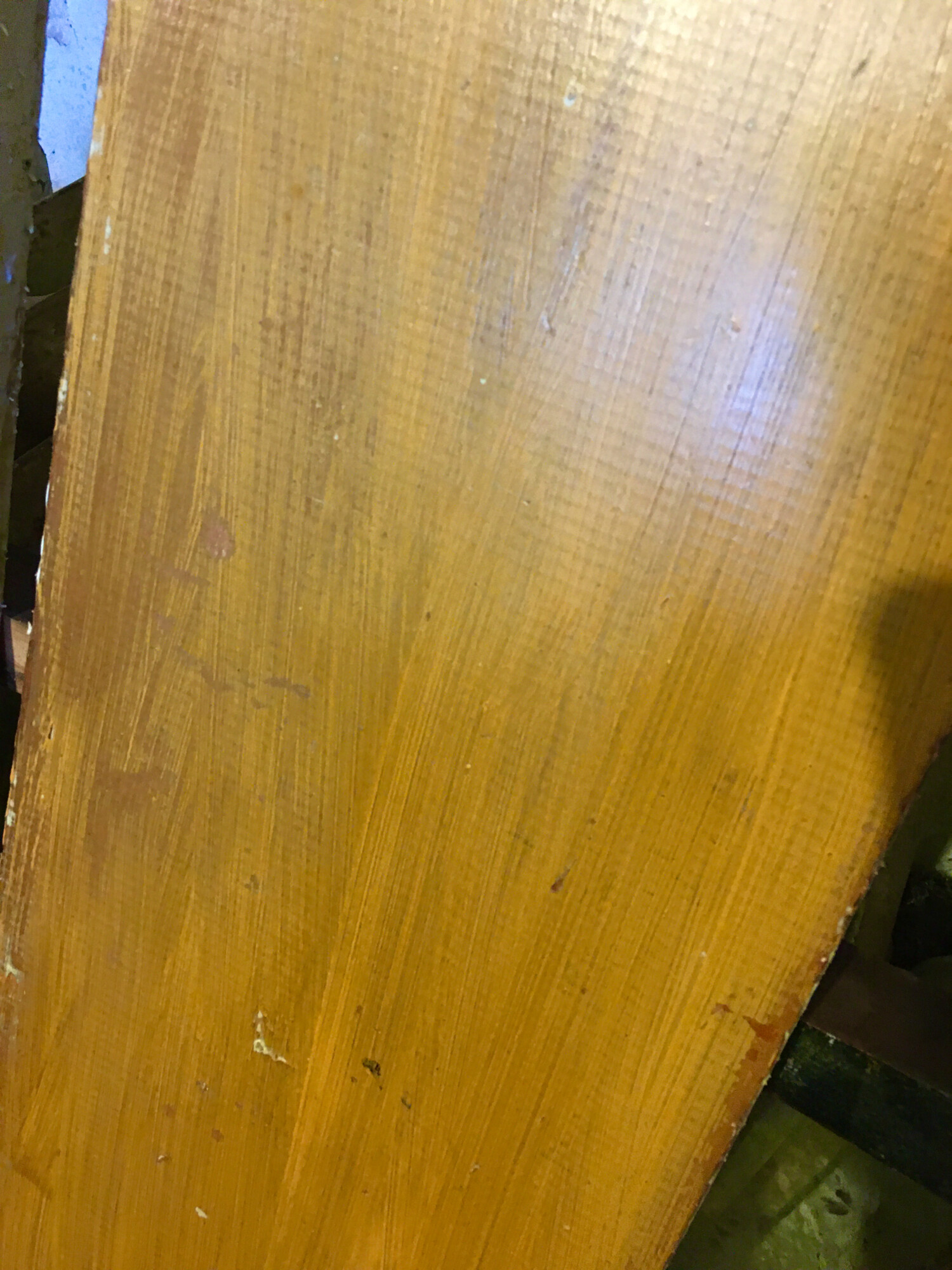
The faux bois finish however looks nothing like wood. Rather, it has a striated effect. Wait…where have I seen that before?
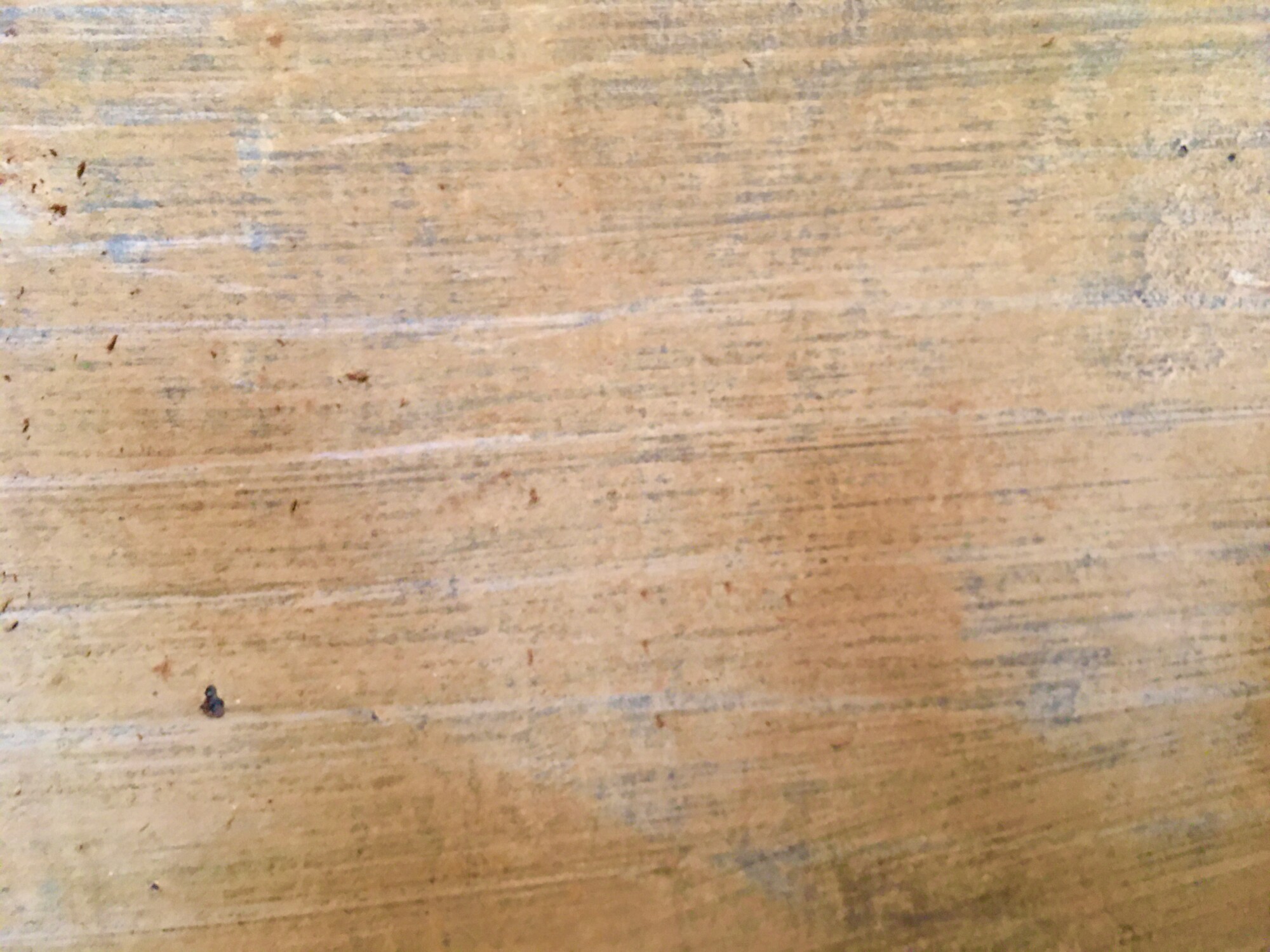
Ye gads! In February, I did a post about discovering the original wall finish in the blanket closet. This, too, had a striated effect.
This is all VERY weird.
I have no explanation for all this.
But…I do know that God is jerking my chain. And I have proof.
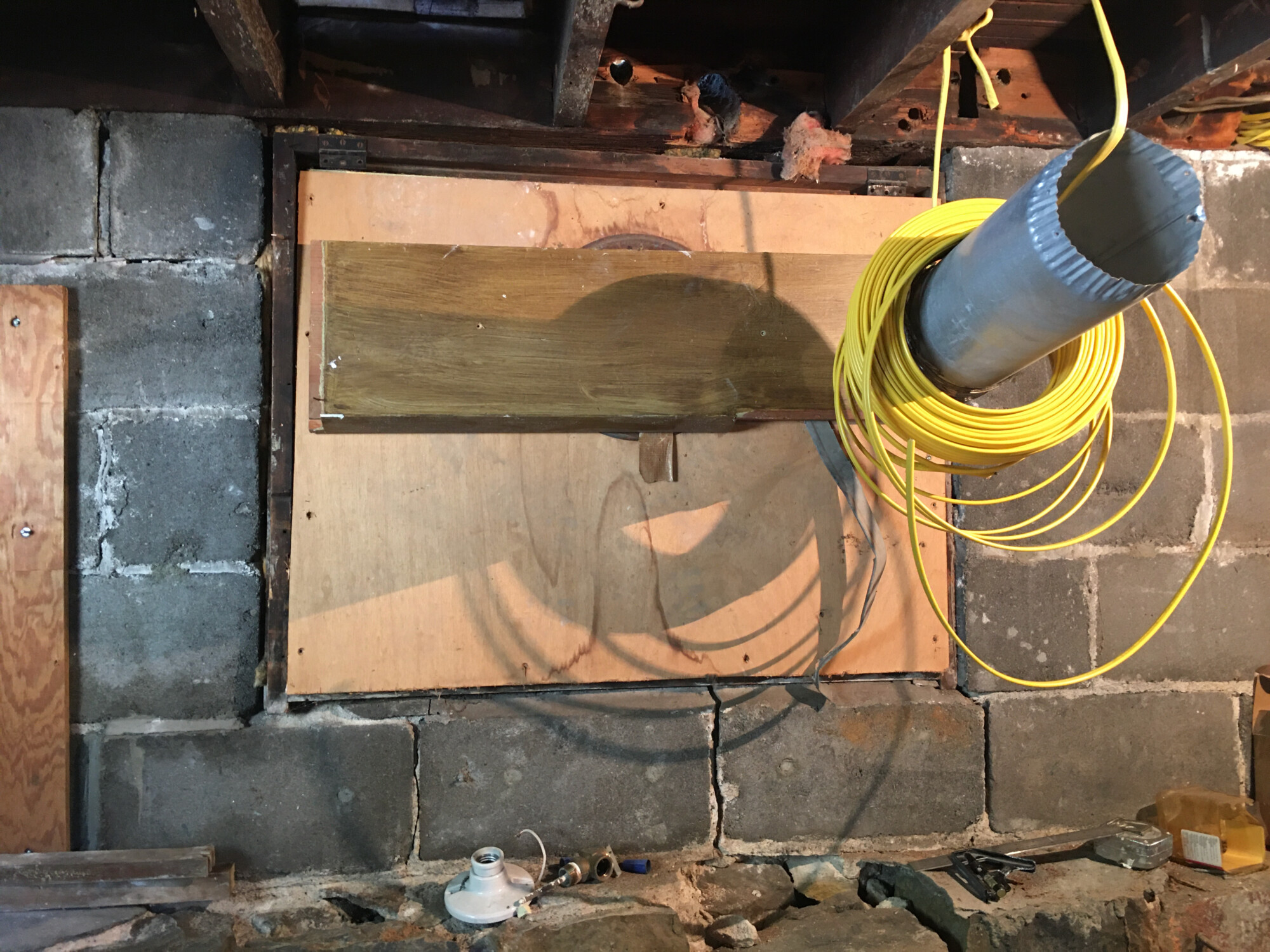
In my previous post today, I wrote about installing a restored sash in the basement of the carriage house. The window was covered with plywood which had, until a few weeks ao, a HVAC duct running through it. After the duct was removed, I covered over the round hole with a 1×8 board that came from the adjacent demolished 1960s studio apartment
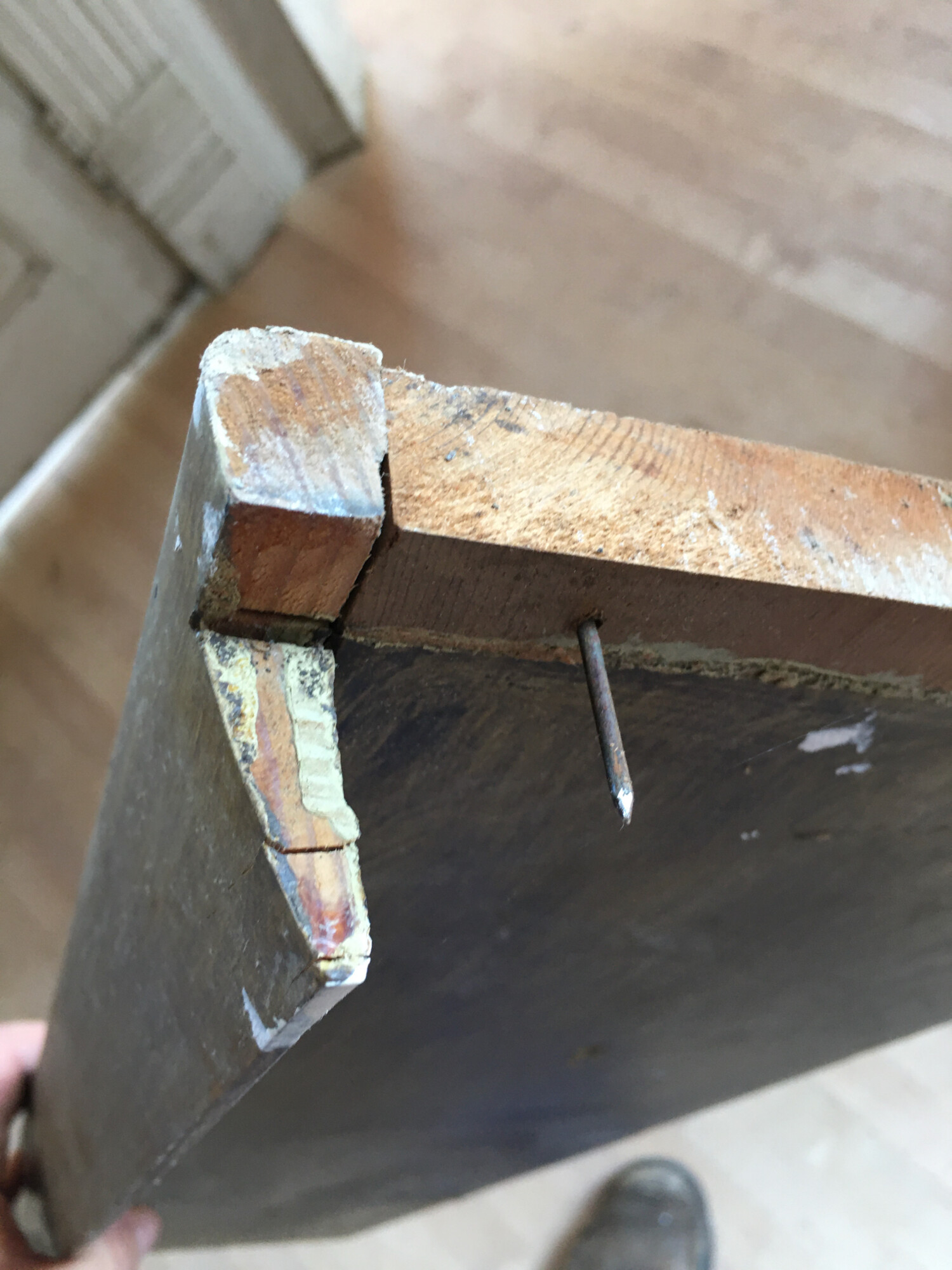
The 1×8 is attached to 1960s clam-style trim.
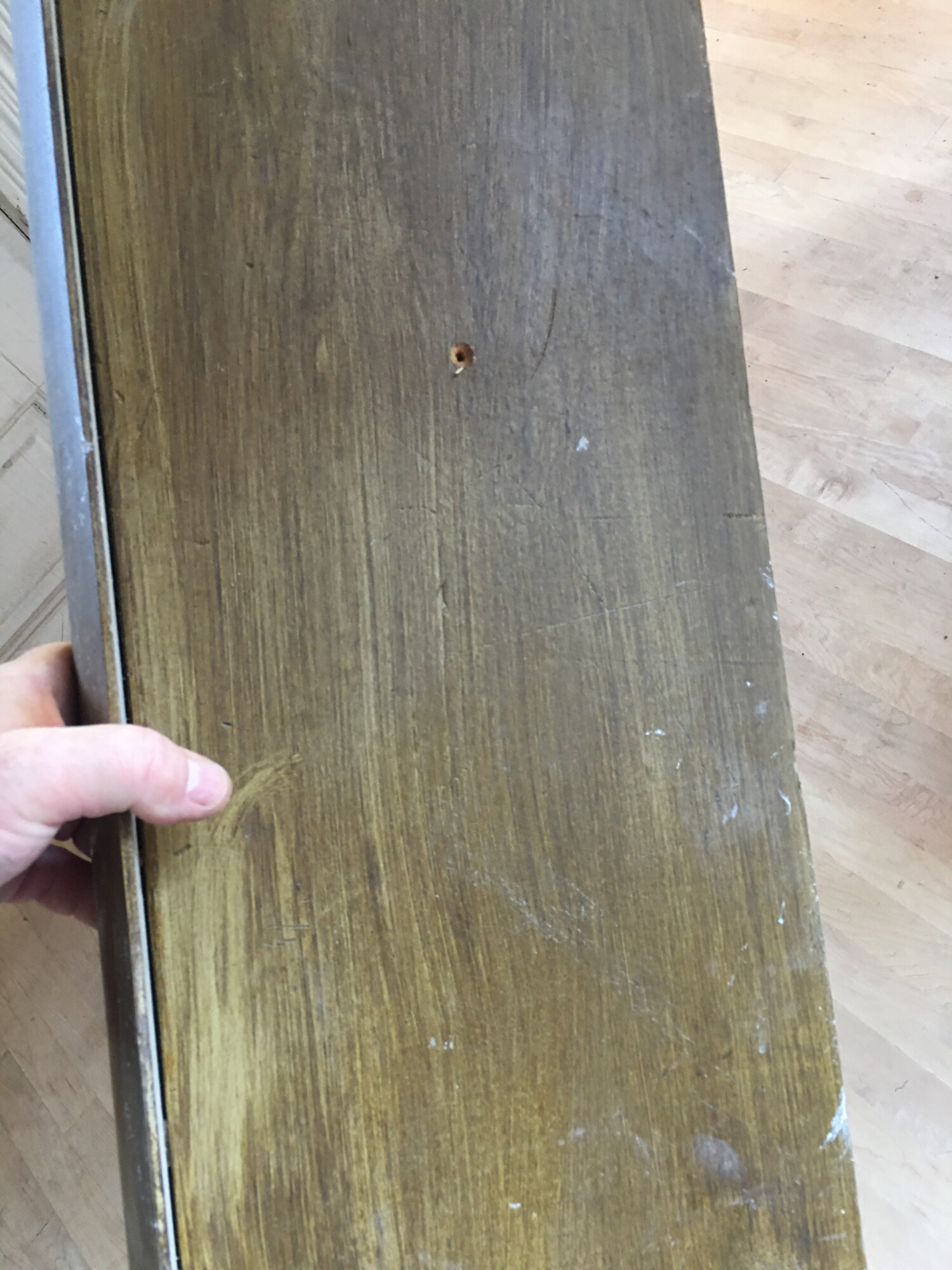
And the trim and 1×8 both have…I’M FREAKIN’ OUT, MAN! FREAKIN’ OUT!…a striated effect.
WTF? WTF?
Again, these pieces of wood are from the 1960s. From a different building, under a different 1960s owner than the Cross House. And the pantry in the Cross House was, by the 1960s, already slathered in white paint.
And just now, NOW, as I am trying to figure out what is going on with the 1894 striated finish in the Cross House pantry, I am smacked in the face with some 1960s wood in the carriage house with a striated finish?
I need a drink. STAT.

11 Comments
Leave a Comment
Your email address will NEVER be made public or shared, and you may use a screen name if you wish.
The striated finish dating from the 1960s, when everything new was old again. might well be due to the marketing success of “antiquing kits”, an assault led by Martin Senour Paints. The striated finish was a moderately basic technique.
I have no idea about any striated finish from the previous century, as meddlesome time-traveling hobbyists are an imagination rather than an idea.
Thanks, David!
In the late 1960s, my mother purchased an antique bed. Pretty fabulous.
She redid it with an all-the-rage striated finish.
Here’s my explanation
The painters doing the fancy finish needed a place to clean their paint brushes so they used exposed parts of the closets etc to remove the remaining paint on their brushes but didn’t take the time to make it look fancy.
I remember this finish…in the 80’s my semi-retired ex-weatherman grandfather did it on all exposed woodwork of their 1960’s Canadian bungalow. His favorite color combo? Avacado green with black.
I also remember his basement man-cave efforts with a decommissioned jewellery store case-as-bar and milk can barstools.
Of course he also repaired everything with hockey tape and polyfiller.
Thinking of it now, I lament his suppressed wanna-be decorater soul and want to give him a hug and a high-five.
Plainly what we have here is prior owners’ failures to maintain the historical narrative.
The resulting confusion appears to prove your insistence about maintaining the narrative. It’s really just perplexing.
Is it possible that the entire shelf unit is not original? Shelves, vertical parts that hold up the shelves, and all? It would hardly be unprecedented that a later addition, well after the original homeowners are long gone, might be made of random pieces of lumber or parts of some junked piece of furniture. Since the use of the property changed so much over time. Which might explain the randomness.
Thad, I’m confident that the shelf unit is original.
I have a full set of original drawings on the pantry.
That’s right, you have plans. In that case, it’ll be interesting to see if the vertical shelf supports (the sides, unclear on what else to call them) have the same janky faux finish.
If the sides don’t have the finish, maybe the shelves were simply replaced at a later date, by whatever was handy. My kitchen is only a dozen years old and I’ve already replaced two shelves, added another, and made other modifications that might confuse someone if they didn’t know the history.
No faux finishes, though!
I’m with Barb, looking forward to your final a-ha moment when you figure it out.
In this case, more data seems to be muddling the problem rather than pointing toward a solution. I can’t wait to see how this mystery evolves.
I think Thad is on to something. I concur.
Well, if that’s the 1960s “antiquing” kit, it’s utter garbage. I had to repair my aunt’s 1950s coffee and side tables after her son used a kit. Painted the blond furniture an off white, then used a “maple” paint over it in striped effects. It was horrid. Fortunately, he had not sanded before doing it, so removing it was far less difficult than I’d envisioned.
I’d say that gives Ross free rein to do whatever feels right.
Sorry #3 didn’t solve the mystery. Onward…. 🙂