
1921 Insulation
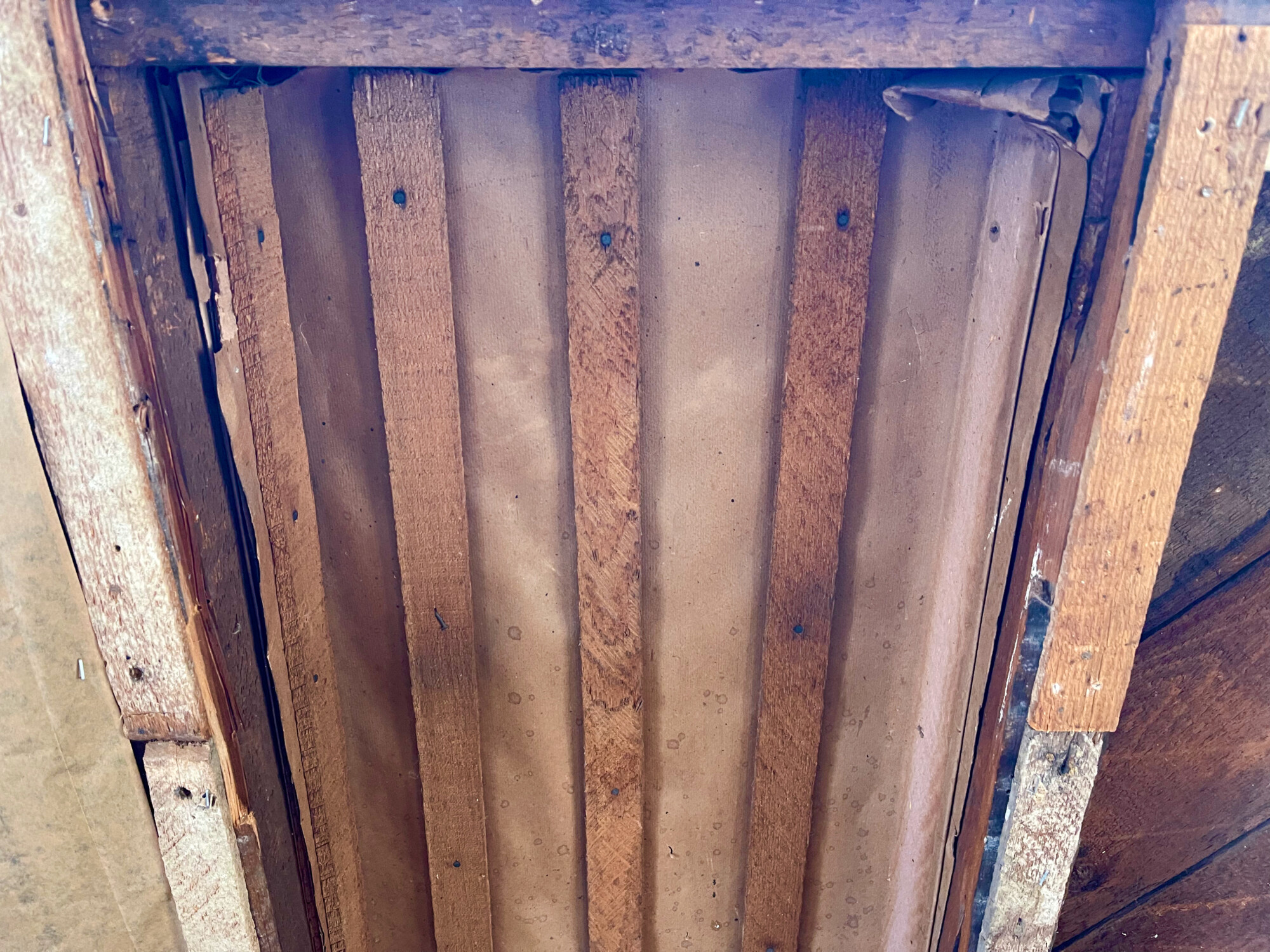
In the carriage house, the hot/cold water lines installed circa-1921 were placed in an exterior wall. This is bad. I never never never do this. In 1921, this was obviously a concern as this highly curious insulation was installed: four layers of Rosen paper nailed on with lath.
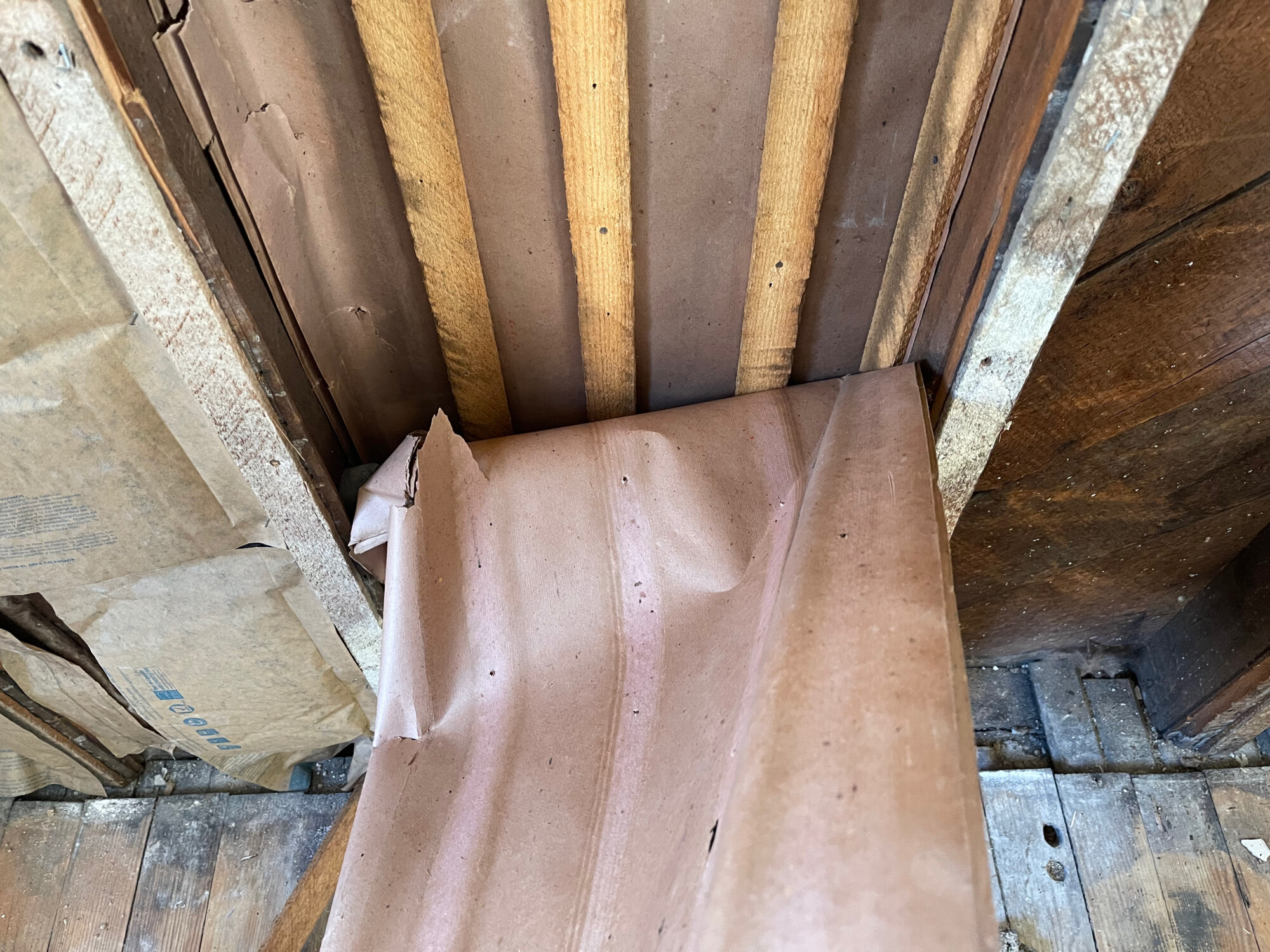
And under this was ANOTHER layer of Rosin paper x 4, and more lath. This created a dead air space. Did this stop the water lines from freezing? The huge water stain on the floor would indicate…no.

4 Comments
Leave a Reply Cancel Reply
Your email address will NEVER be made public or shared, and you may use a screen name if you wish.
Very interesting! I have not seen that approach before.
I do have an old architecture book that shows a wall detail for “cold weather construction” that consisted of a second layer of plaster and lath over thin furring. It’s the trapped air space in insulation that does the work, so I can see how that would help, but many small trapped air spaces like modern insulation is far more effective.
So this is called Rosin paper. I uncovered it in the cemetery around the corner, along with linoleum squares and carpet. In another place, it was with painted wood and roofing shingles.
My kitchen has the hot and water pipes in the exterior wall. The original cabinetry, long gone, had slits under the sink to let in heated air. I prop the cabinet doors open when it gets in the twenties.
Isn’t necessity the mother of invention? Interesting. 🙂
A few days ago I got the chance to have a close look at a rather dilapidated eastern-European industrial shed from the 1970s. The steel structure was clad with asbestos-cement sandwich panels. One layer of cement on the outside, then insulation, roofing felt and another layer of cement. The insulation, no kidding, was roughly 100 mm (4″) of corrugated cardboard!
The Scandinavians used sawdust or planer shavings for insulation for centuries and it worked quite well.