
North Chimney
The Cross House has three towering brick chimneys, leaping out from the roof. But only the north chimney is visible below the roof.

Note how the chimney is bisected by the huge cornice, which also contains the built-in gutter.
An issue with the chimney, a huge issue, is that it sunk 2-1/2-inches over the last 126-years. This also dragged down the gutter, meaning that rather than water from the roof draining into the gutter, and then, like a river, moving along horizontally until it meets a downspout, the water from the roof instead just spills out of the gutter like a waterfall and down across the brick face of the chimney below, leaching out most of its mortar over this 126-year period.
And…this is bad.
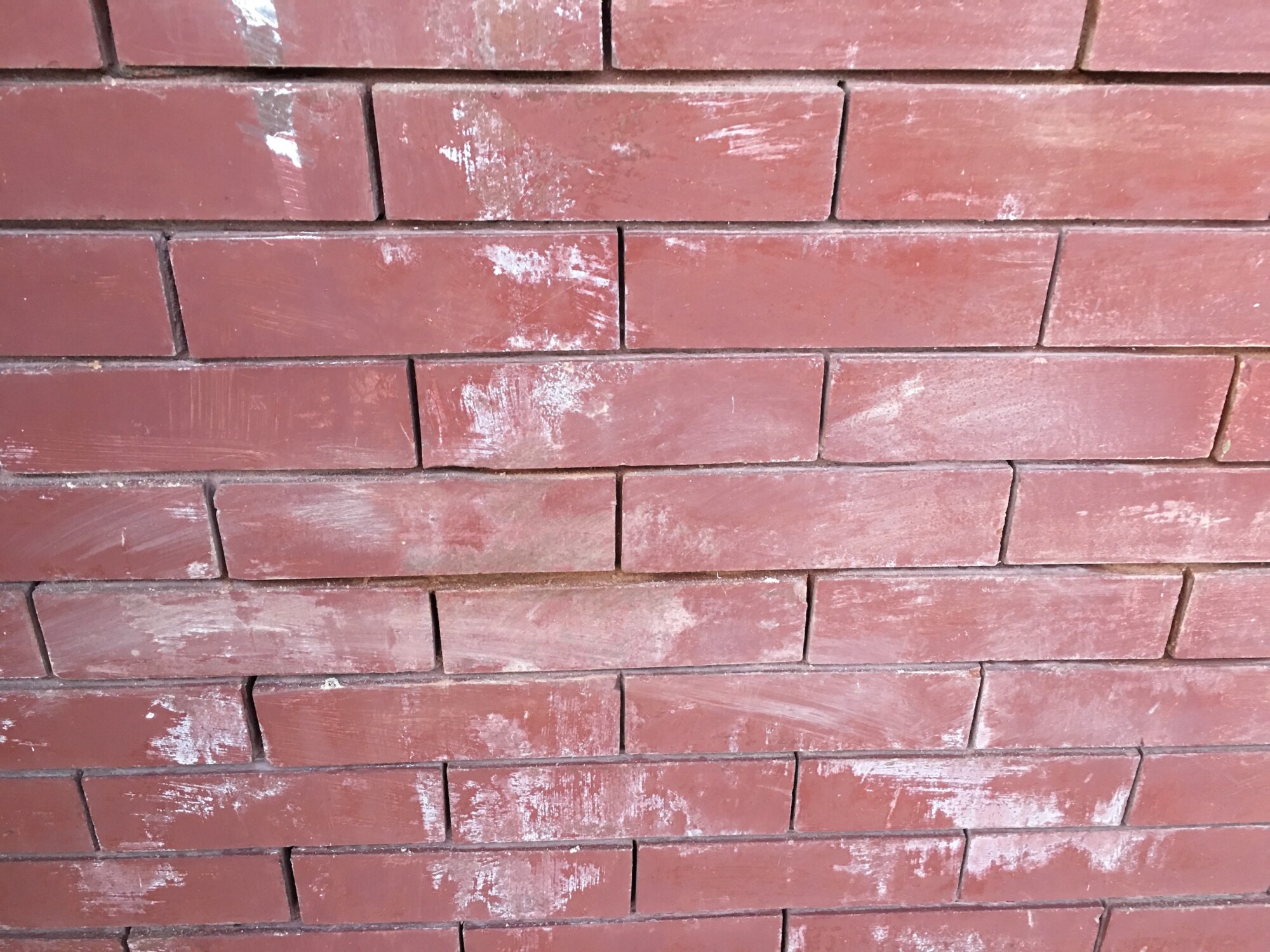
Very bad. Note: The bricks have been painted. Sigh. This will be a project down the road.
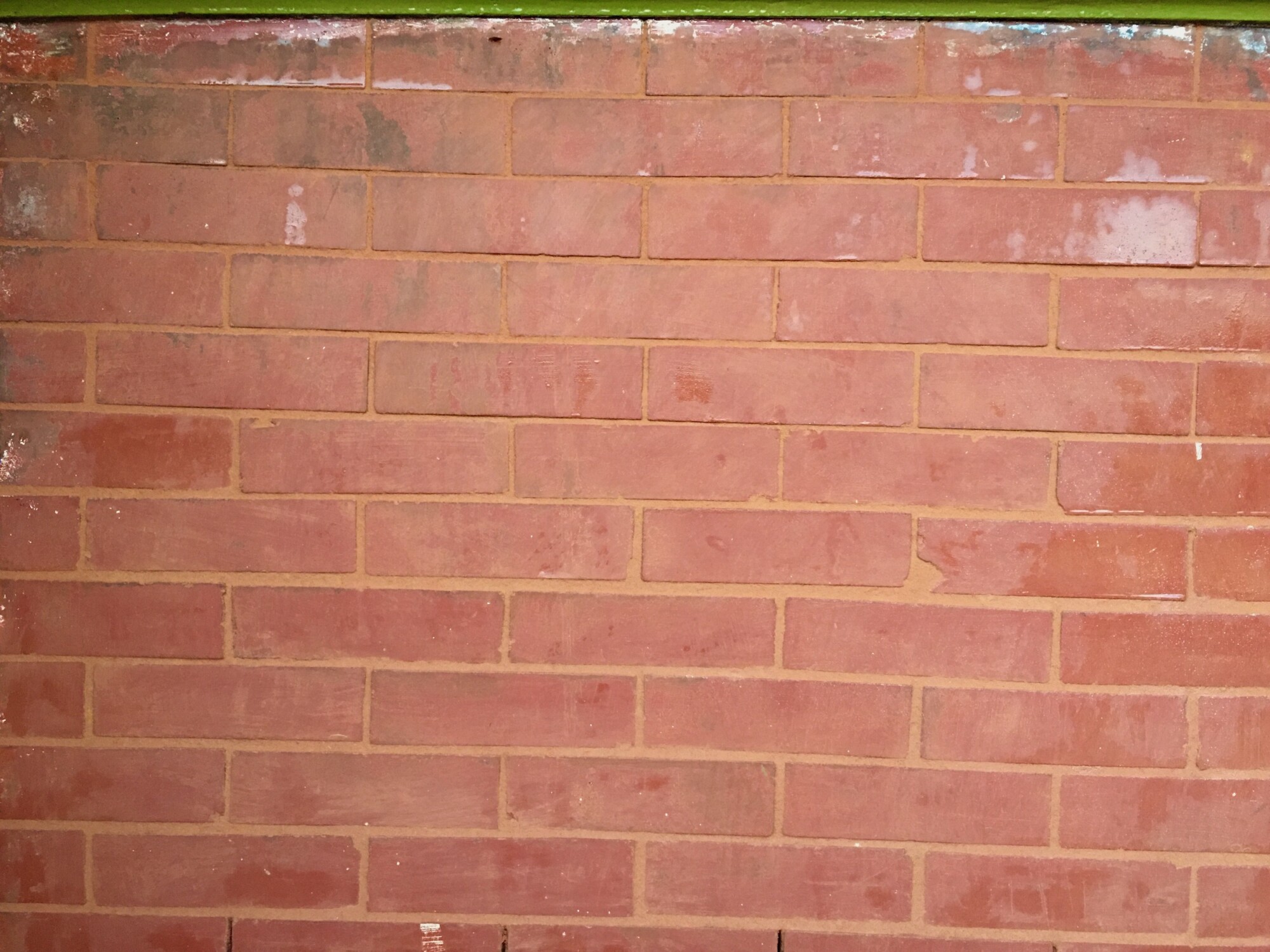
Today though the upper section has been repointed!
SQUEE!
SQUEE!
SQUEE!
The mortar is not hard modern cement and, as such, will not damage the 1894 bricks. This is vital. US Heritage was hugely helpful with all this.
I also ordered colorant so the mortar is not gray. Oh, the horror.
It is really tricky doing all this in December. Ideally, the temperature should be like 70-degrees, day and night. The scaffolding was erected many months ago with the work, presumably, commencing forthwith. But, 90-degree-plus weather is bad. So, the project was paused to await an ideal 70-degree window.
Which came, and went, in a flash. Huh? What?
Really. Here it Kansas it went from blistering hot to WINTER almost overnight. What happened to fall? It never arrived.
So, while the daytime temperature today was almost 70, tonight it will be 32. Which is OK. But then it will drop into the 20s at night over the weekend. This is sooooo not OK as the new mortar will freeze and then fall apart come spring.
To offset this, after each day I tape thick plastic over the area of brick being worked on, and then tape a heating blanket over this.
Let’s all pray that this works.
Oh, and yes, I need to deal with the gutter!

7 Comments
Leave a Reply Cancel Reply
Your email address will NEVER be made public or shared, and you may use a screen name if you wish.
Yay!!! I have been worrying about that darn chimney for months. I love talking about wallpaper, but in the back of my mind I kept thinking about that chimney work. I even have Emporia’s weather as a default after Gillespie’s, so I saw how cold at night it would be for the next ten days…but I also remembered the heating pad idea!
So relieved to see how you are progressing. It looks wonderful!! Good job outta you!! One more BIG project to check off your list soon.
Looking good! I’m glad US Heritage was able to help you out as well; I was very happy with their work on my mortar-matching.
I’m learning a lot from this post. Like, you have the patience of a saint, the ingenuity of an artist, and the persistence of an editor on deadline. You amaze me, you really do.
I hope the blanket works for you. I also feel your yearning for 70 degree weather…it is the same way in southern Illinois. I tell people that autumn is my favorite weekend of the whole year…
My two cents.
As I understand it, chimneys are not supposed to have anything attached to them, such as the cornice with the gutter. The cornice should, according to what I have learned, be attached to the house on either side of the chimney, while no connectors or other hardware would have been attached to the chimney through the cornice originally. I believe that it is acceptable practice for the chimney to be tied in to the side of the house, but not to the cornice or any trim.
I wonder if slipping a hack saw blade or other tool between the chimney and the cornice, cutting and releasing it from any connectors, would allow the cornice to be raised to the proper level. Those connectors must be under tremendous pressure from the drop that has occurred. They may have been original or added sometime after the house was built when the chimney may have been free of the house’s framing behind the cornice.
I use a powerful small magnetic to detect ferric hardware near the surface of the wood. A stud detector might work if no metal detector is available. Perhaps you can locate retro fitted fasteners that need to be cut between the chimney and the cornice. If the cornice was not originally attached to the chimney during the process of building the cornice, then all the fasteners to the chimney would be around the perimeter where the chimney and house abut each other, and through the surface of the cornice. If they are screws, their heads could be exposed and they could be unscrewed or drilled out. If drilling out, I find that drilling with a bit that is thinner than the fastener before drilling with the size bit that will remove it keeps the drill bit from walking right into the wood, leaving the fastener in place. If the drill doesn’t work, a Dremel with a grinding stone on it might.
Well done, Ross! The chimney is also happy to be toasty warm at nights.
I’m amazed at the chimneys. They are simply huge. And understanding how constructed is paramount. Best of luck with this massive endeavor.