
Ross B Confused
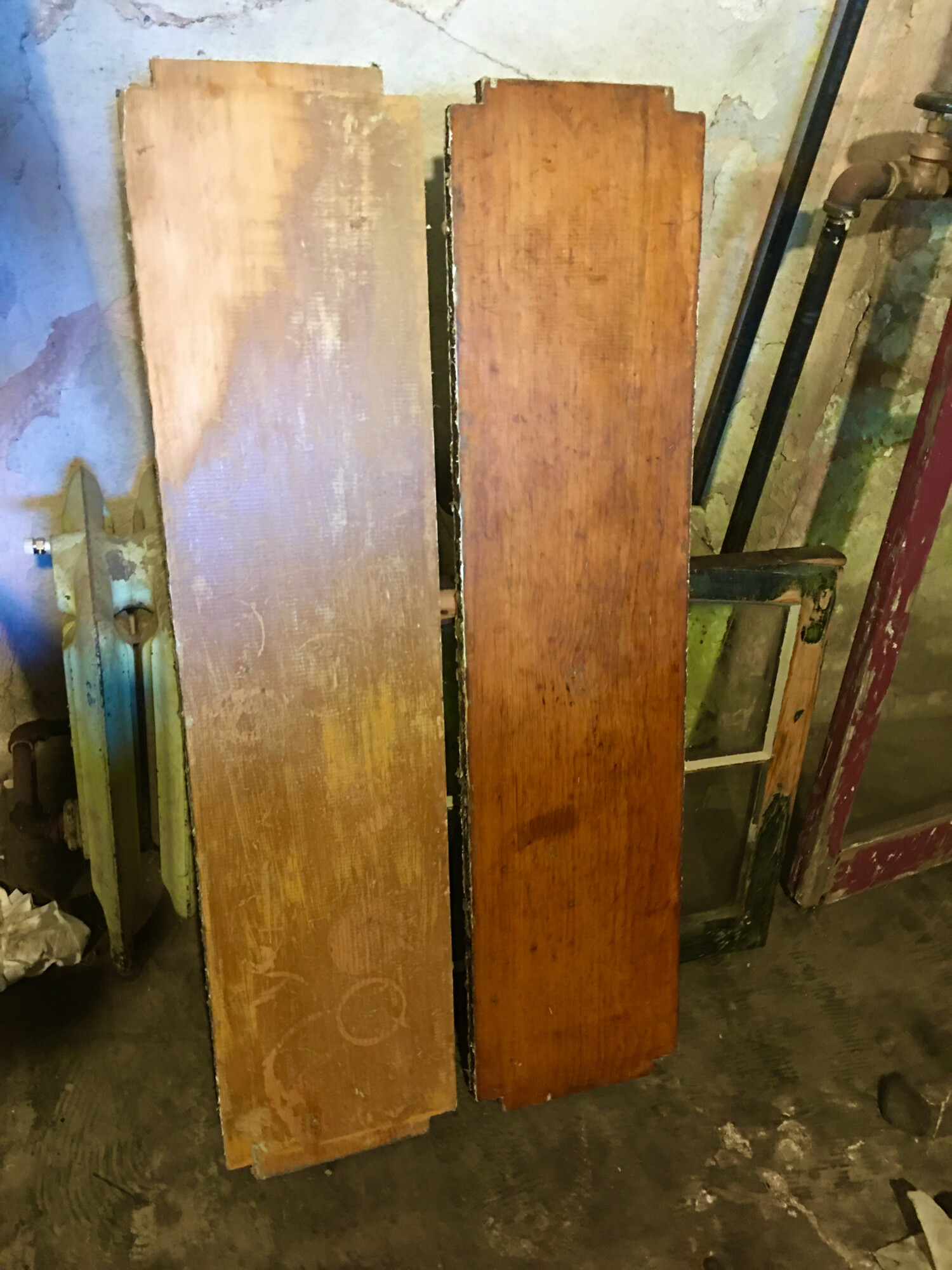
LEFT: the pantry shelf detailed in my previous post. RIGHT: the next shelf. WTF????????
The left shelf revealed…to my great surprise, as previously detailed…a seeming faux bois (painted wood) finish, as is common throughout the Cross House.
But why would the pantry have such an expensive finish?
The right shelf revealed…to my great surprise…exactly what I expected: under numerous layers of white paint there was an original shellacked layer.
WTF????????
Why would the bottom shelf have a faux bois finish, but the shelf above have a shellacked finish?
And then…drum roll, please…it got MUCH weirder.
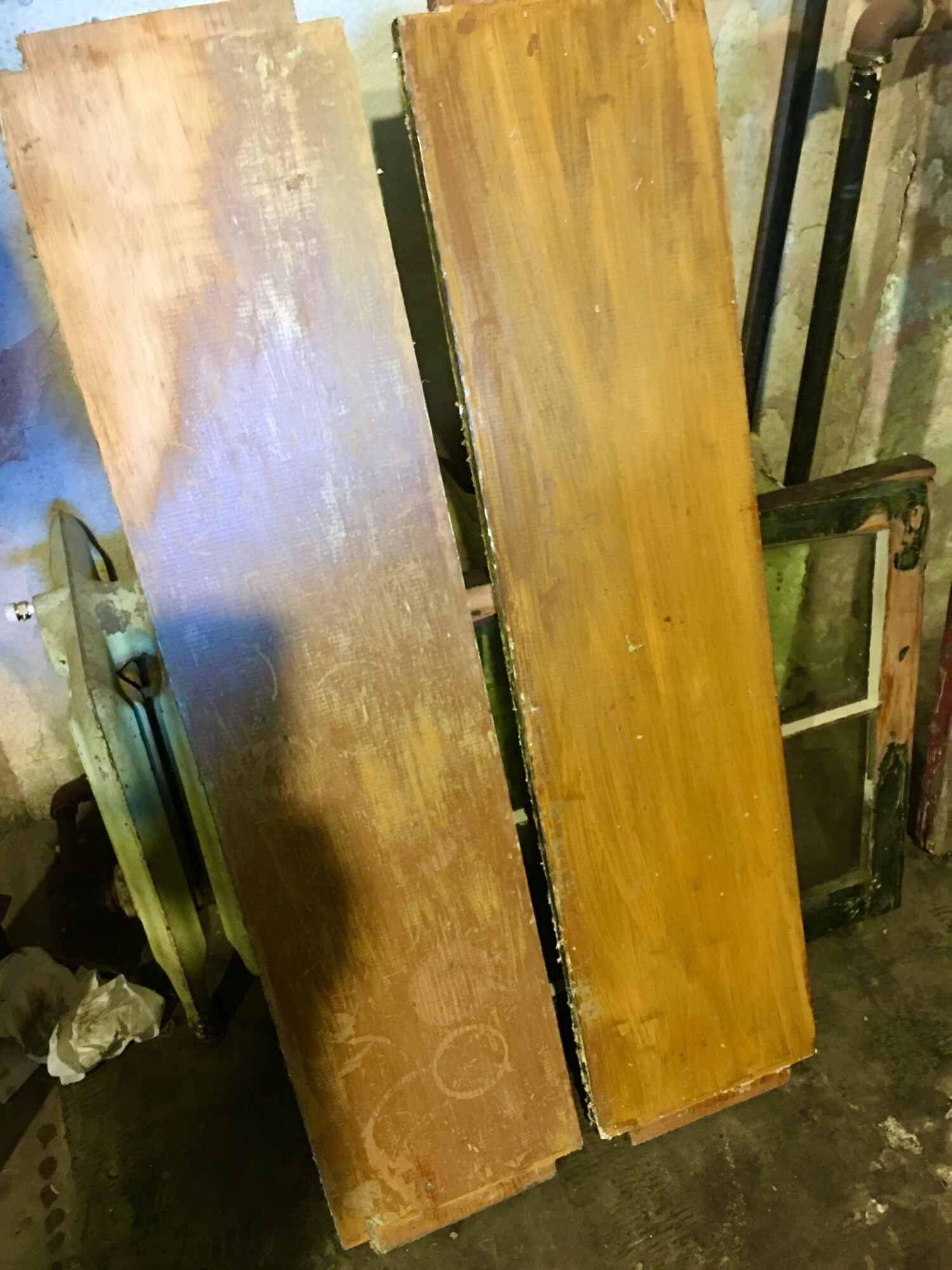
While the top of shelf #2 has a shellacked finish (see previous image), its bottom has…WTF????????…a faux bois finish.
Huh?
What?
I’m trippin’, man, trippin’!
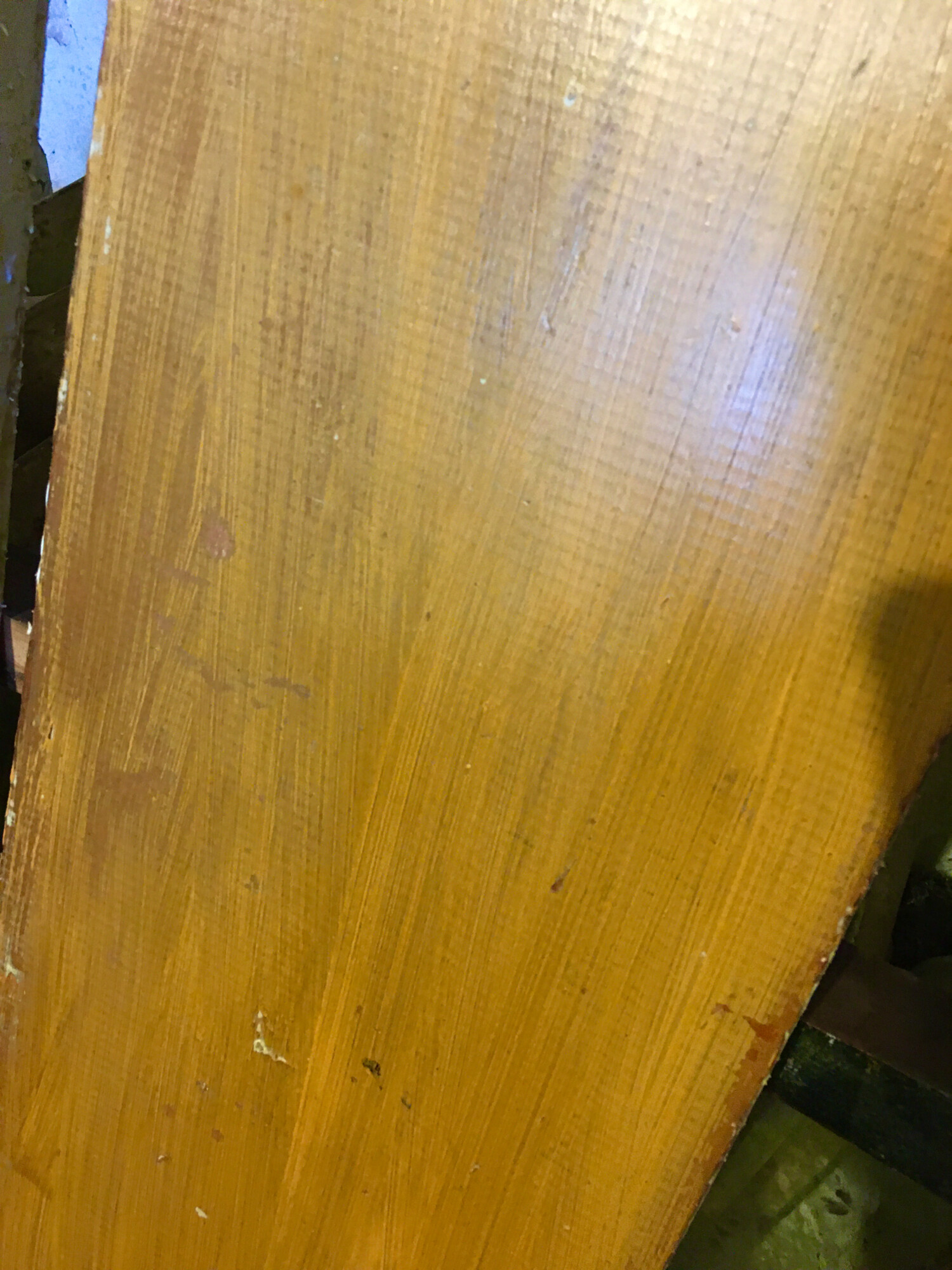
And the faux bois finish looks nothing like wood. It is just sloppy and bad.
WHAT is going on?
WHAT will shelf #3 reveal?
Ross is very confused.

14 Comments
Leave a Comment
Your email address will NEVER be made public or shared, and you may use a screen name if you wish.
I can imagine, long ago, a couple of tradesman working on these shelves…….”Let’s do an odd finish to these shelves. In the future, some lad’ll come along an’ he be trippin’, I tell ya, trippin'”
No doubt, Sherry!
Are these practice samples for the owners to approve for the rest of the house colors .
Maybe, Kelly.
Maybe not.
It’s all exceedingly curious!
I’m quite vexed!
Were these shelves cut from something that had the finish already on it? Just a wild guess.
I think your first theory about the apprentice was partially correct.
I think the tradesmen likely used several boards to paint sample finishes for the owners. Then, once the decision was made, they were cut to be used as shelving in the pantry where they would not be seen except by the servants. No sense in letting them go to waste.
I’ve done similar things myself. Using a pattern drape as lining, putting odd leftover tiles behind or under something where they would never be seen, using leftover paint in a closet, cupboard or inside something.
Like “end of the day” art glass pieces.
My best friend in high school’s house had an “end of the day” bathroom, where the workmen used all of the leftover tile from all of the previous jobs in the neighborhood and tiled the bathroom in a wild patchwork of all of these different colors.
Can’t wait for episode three in the Cross House Pantry Mystery Series.
Maybe this is an opportunity for you to do something wacky with paint without feeling guilty for painting over original finishes!
The thought has occurred to me, Jordan!
If it were a high end wood bookcase such as walnut, the shelves would have a strip of walnut on their fronts, but the main part of the shelf would be a less expensive wood. The tops of tall furniture like tall chests of drawers and grandfather clocks were usually unfinished secondary woods.Maybe the shelves where one could see the surface were faux painted, while upper shelves that would be above eye level were just shellacked.
That’s what I was thinking, too, Stewart. A half decent, or an apprentice’s faux painting where it’s visible, then just shellack elsewhere.
But that says to me Ross has freedom to play here.
Ross, I think you have probably figured out what’s going on. It’s pretty funny to see that, though. Very interesting, and I like the deduction skills used to find that the original piece was a faux bois finish.
Eagerly awaiting #3! 🙂
I have been pondering this way more than I should, It occurs to me that shellac is very sensitive to liquids, so I wonder if these shelves were used for items that had moisture in them, which would damage the finish more easily, So they used paint on these to be a more durable surface. (either originally or shortly after the house was finished an added really early) No way to know for sure of course, but an idea…