
CH: Day 35

JP asked for more of a distance view.
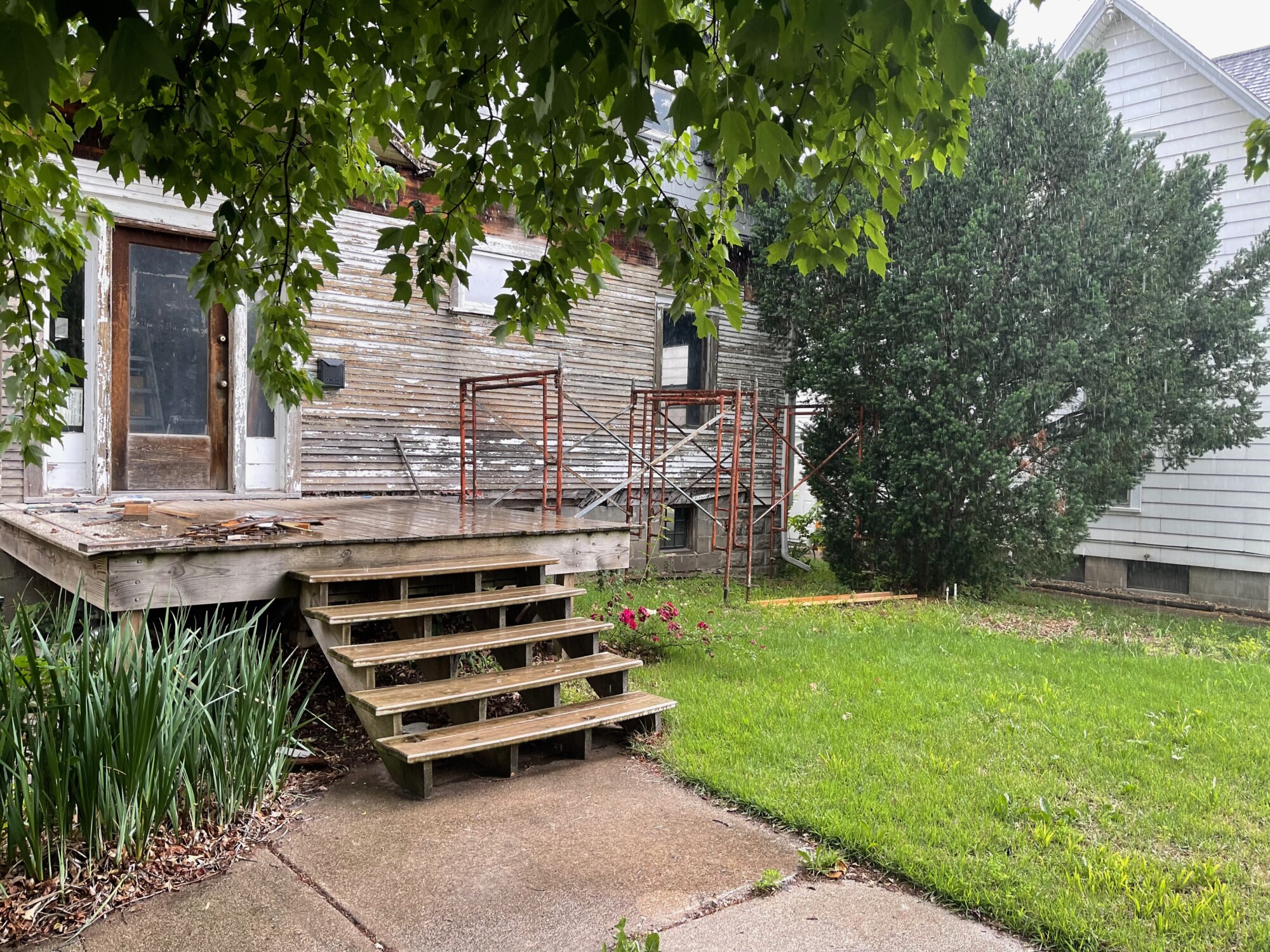
Yesterday I posted this image of the scaffolding erected in front of the main west front. Today, I finished the work, adding scaffolding atop the porch. All the ‘decks’ are now in place, and I can walk the length of the west front way up high. Cool. Next, I will install a blue tarp the length of the west front to protect myself from the summer sun, and the paint from the summer sun. Otherwise, the paint will blister.
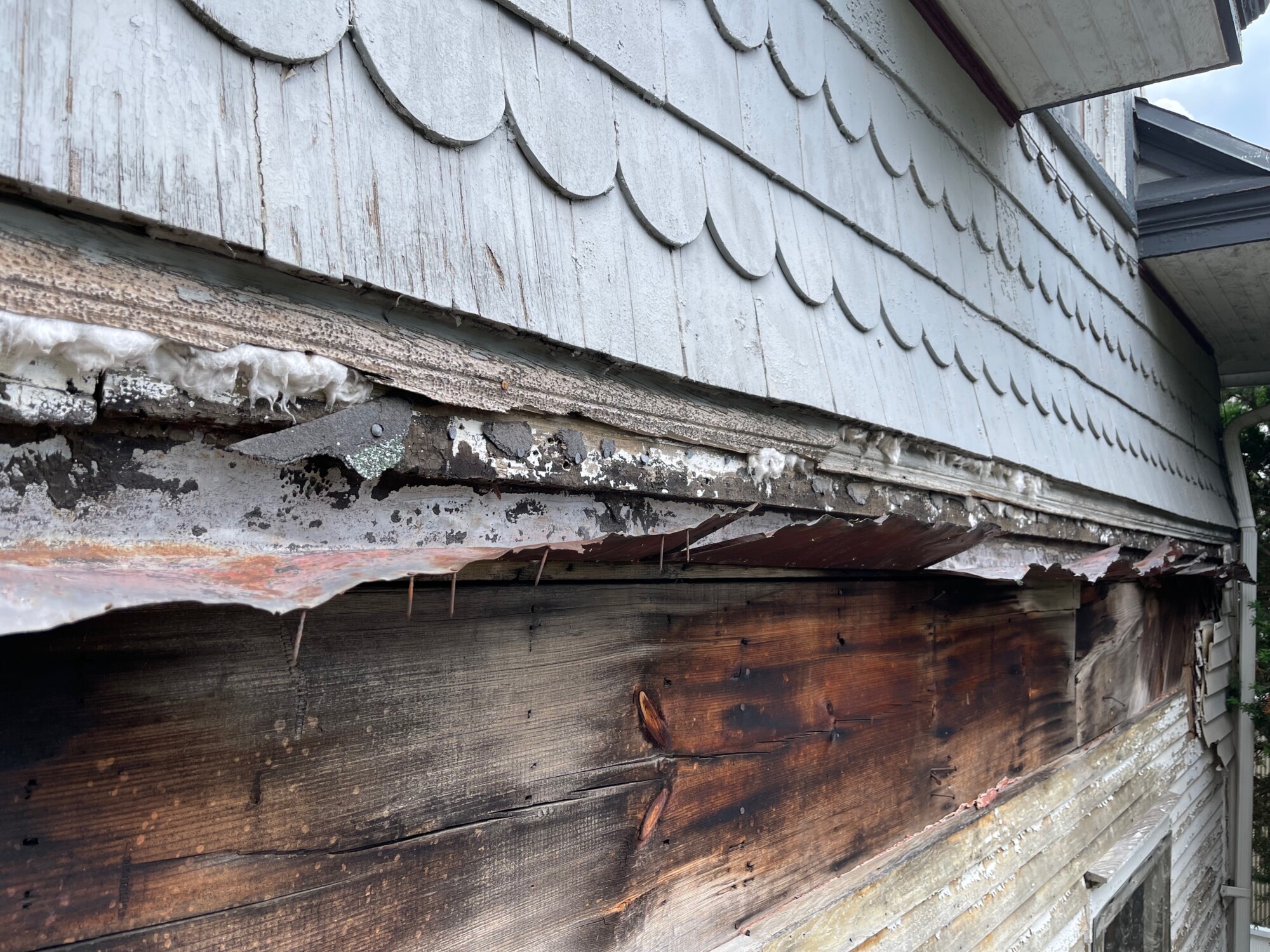
The second-floor shingles flair out, as they do on the big house. Under this flair is a crown trim, and flat trim. The ragged metal you see is the circa-1920 flashing when a porch was installed.
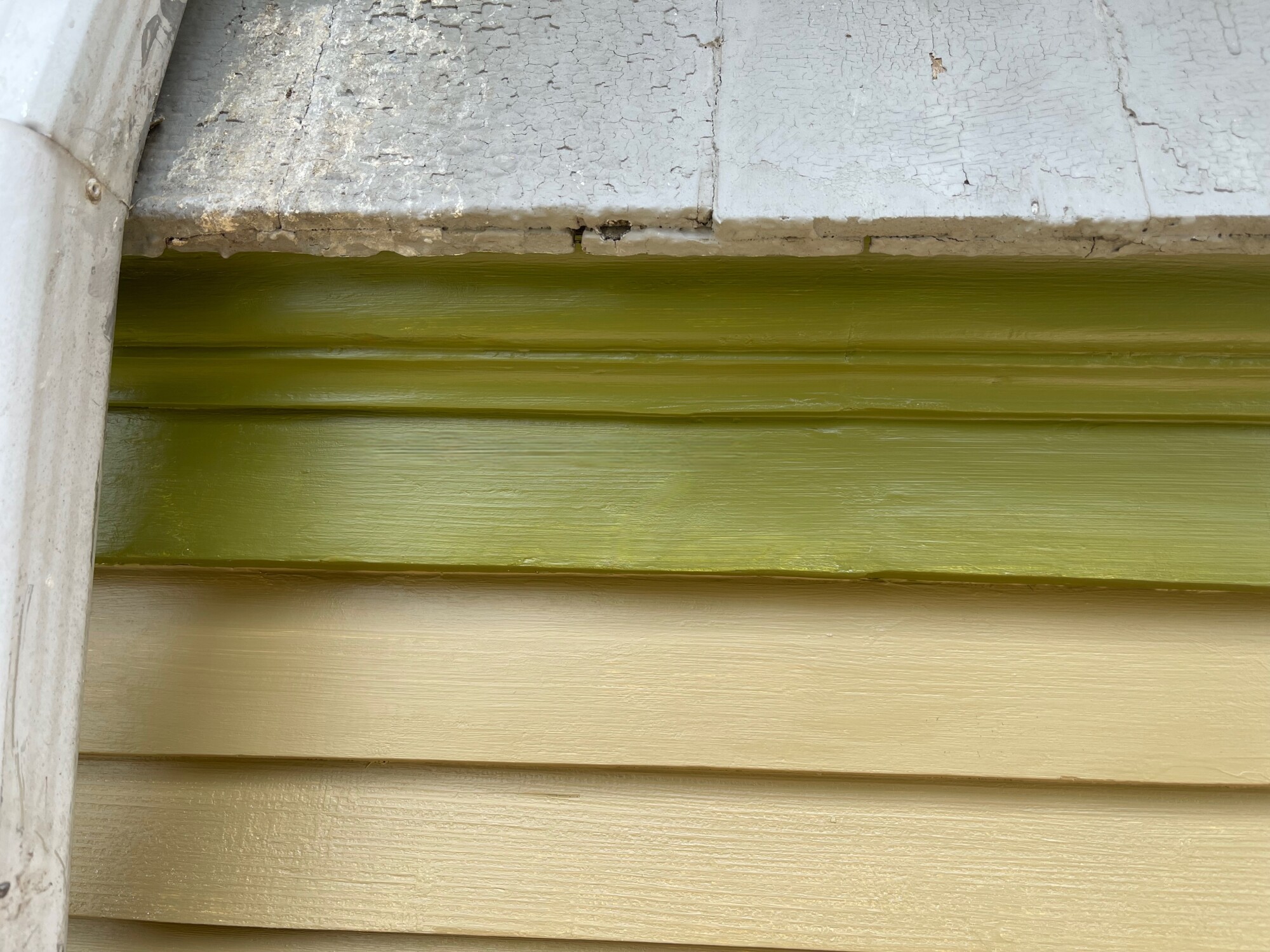
This is what the 1894 crown/trim looks like restored.
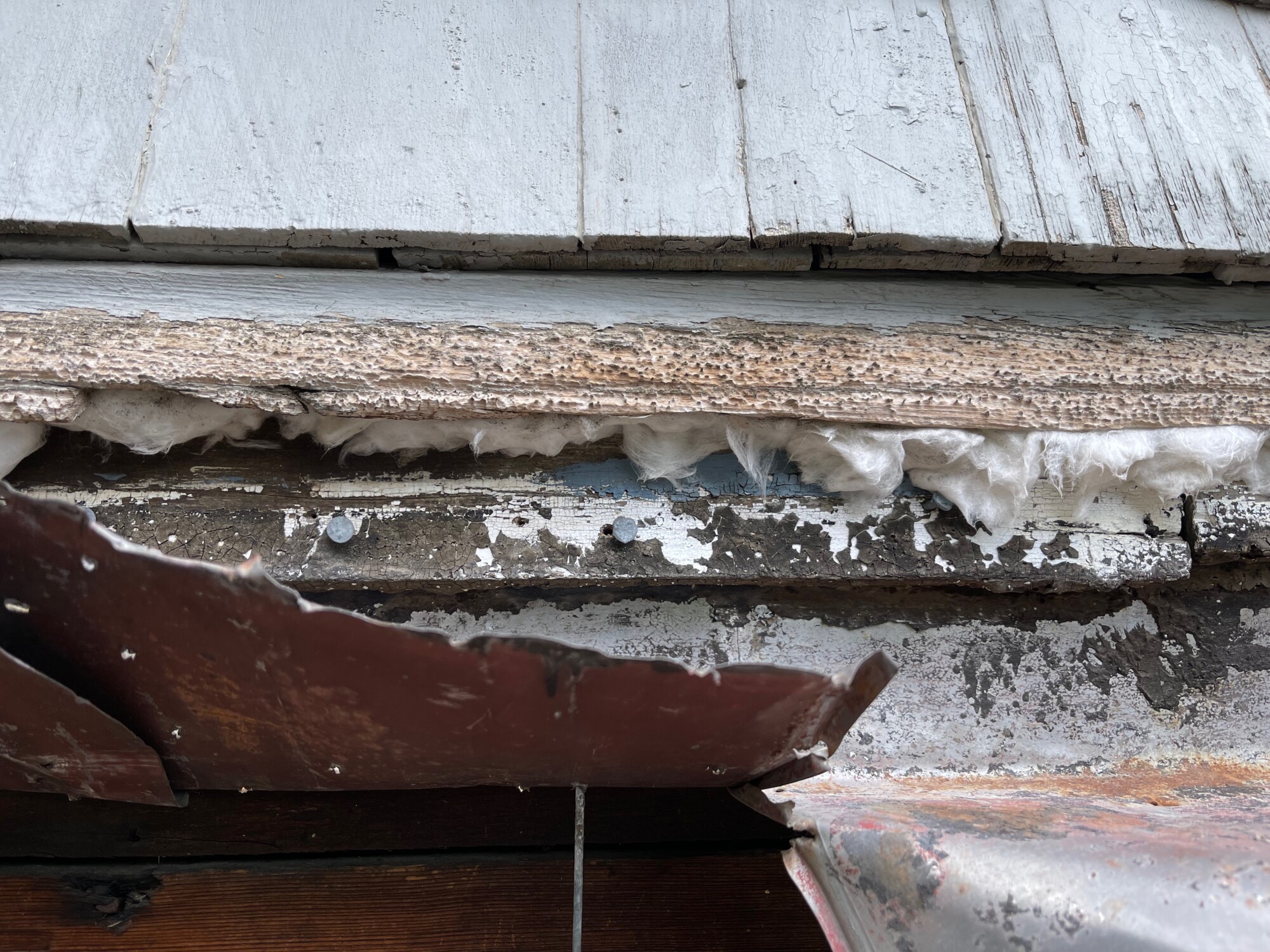
This is how it looks now. Oh, the horror. The crown in this area will need to be replaced.
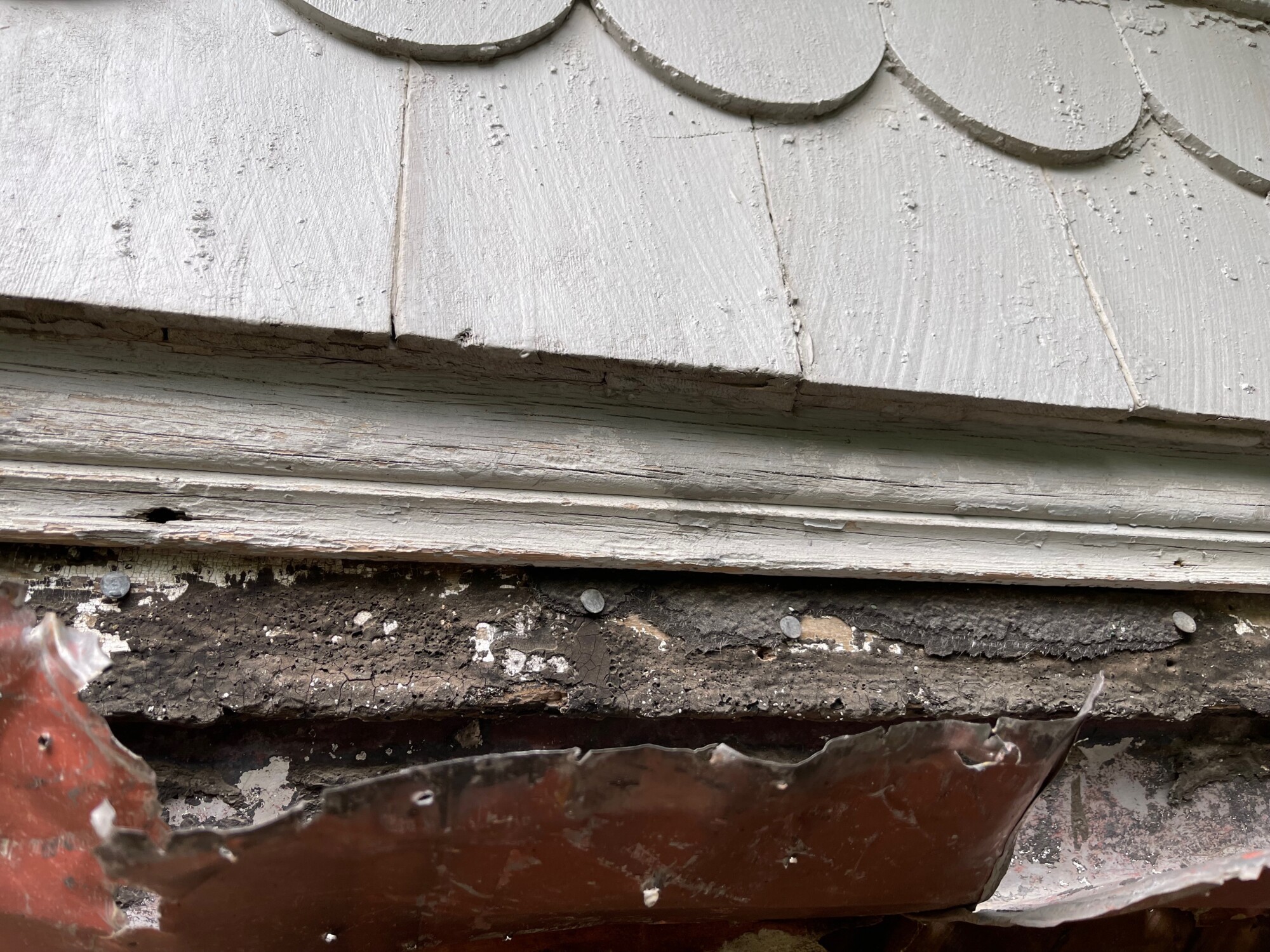
I might be able to salvage this crown.

This is how the carriage looked when I purchased it. The huge porch was added during the circa-1920 conversion to a house. As were the dormer windows.

I removed the profoundly rotted porch in 2014. I will also later remove the dormer, center. The 1920 door will later be moved around the corner, and the large window (far left) will be relocated (later) under the turret, centered. For now though, my focus is only to infill the missing siding and paint most everything on the first-floor with primer.

15 Comments
Leave a Reply Cancel Reply
Your email address will NEVER be made public or shared, and you may use a screen name if you wish.
So exciting! Thanks for a peek.
It will look much cleaner and less cluttered with that middle dormer gone. What were they thinking?
If you are going to lay clapboard along that upper area I hope it doesn’t take another 30 days before you can paint.
That middle dormer does look weird. While I confess I do like the porch and the double-storey railings, when I look at the 2014 photo, it looks a little “off” to me – as if it’s fighting with the original architecture and the lines of the building. As always, you are doing a wonderful job Ross. Every little bit makes Emporia a more beautiful place!
Thank you, Paul. I have a great discomfort with most later work to old houses. Like a fabulous 1870s Italianate with a 1910 Colonial-Revival front porch. My eyes get a headache. The 1920 porch on the Carriage House was Mission-style stuck on a Queen Anne facade. Just no.
The facade won’t look right until I remove the one dormer, reset the entry and big window, and build the roofed porch in the NW corner. It all should balance at that point. I hope!
These changes make a lot of sense! I still think the turret needs something to visually support it from underneath though, at least decorative corbels. As it’s now it looks like it’s floating.
Thank you Ross! I think that shot brought it a lot more into perspective for me, and I hope the way it looks now without any of the scaffolding to block it makes a profound impact on you too, on just what an improvement it is. Do you think that gable piece behind the center dormer that will be removed originally had any kind of ornamentation or decoration- like windows or vents or the like? Also, have you seen any other evidence of how the roofline may have been altered when the two outbuildings were combined and shifted around? I just realized with you talking about the dormers that there’s that big gable sort of hanging out behind all those crazy dormers and that turret that I hadn’t really given a thought until now.
JP, I believe the roof outline is original, as is the turret. All the dormers though date from the circa-1920 house conversion.
huh, Interesting! Thanks.
Once the center dormer is removed I could see Ross placing a medallion on the gable, similar to the ones on the east and north facades of the Cross House.
Ross no see, Bill! The Carriage House was always simpler than the big house.
I don’t suppose there are any photos of the original Coach House before the top was chopped off and put on the 1920s bottom? The turret looks a little funny just hanging out there with nothing below. The bottom also looks….short. Like it should be 2-3 feet taller. I suppose because the original coach house was probably taller to get horses and coaches in and out. I find it odd they would make such an ornate top. Perhaps this “loft” was originally sleeping quarters for sable boys or whatever servants a coach house would have? I doubt it would be so ornate just to store hay and tack.
Mary, the top was not chopped off.
The structure appears to be, in outline, 1894.
The dormers, as noted, are not original.
The turret is not a tower because it may have had a sliding barn door under.
The building you now see from the street was the carriage house. It had a wing to the north, the “barn”. This was sliced off from the larger structure circa-1920, rotated, and moved behind the relocated main structure. It is now the kitchen, with the sun room upstairs (replacing the original huge ventilator). The basic 1894 roof of the former barn is intact.
The first-floor interior has 10-foot ceilings. Nothing indicates it was once higher.
It is amazing you know all that. Is that from records, word of mouth or just walking around studying the physical structure? (I found blueprints of my house’s 1949 remodel in a closet. My house was jacked up and a new foundation wall and posts on footings were added.)
From the outside it doesn’t look like the inside has 10 food ceilings but then looks can be deceiving. Certainly tall enough for a coach and some stables.
Is there any indication so to what the second story was used for?
Mary, you may want to check out this post from four years ago to get a perspective of how Ross’ carriage house may have looked in it’s original state: https://restoringross.com/the-carriage-house-is-blowing-my-mind/ I remembered finding the picture that Ross shared near the end of the post, so I Googled “carriage house with turret” hoping to find it again, and there it was, under Ross’ post from 2019. At that time, I was thinking the same thing, that it must have had a porch or something beneath it, but this single picture (along with Ross image from the Sanborn map) convinced me otherwise. Since then, we have added an attached carriage house to the rear of our 1886 home, with living space on the second floor tied into the upstairs of our house; I added a three-sided bay window to the huge second-story gable facing the side street, and let it “float” out over the first floor. I am proud of how it turned out, and people who don’t know the house’ history think that it is original since it matches a two-story bay on the house.
Thank you. I missed that original post as I haven’t been following since the beginning.