
How Would Jane Put It?
Today at the Cross House I did something…unexpected.
I had not planned to embark upon this small adventure but curiosity overtook me.
Soon, I was in the basement shop, working away.
When….I encountered something unexpected. Something annoying. Something which made me mad.
While driving home I knew, of course, that I would blog about this. And I knew the perfect word to describe my reaction but then a thought popped into my brain: How would Jane Austen put it?
As the miles passed, I pondered this question.
How would Jane Austen put it?
Now, tuck all this away. We will return to this burning question a bit later.
Today at the Cross House I did something…unexpected.
I had not planned to embark upon this small adventure but curiosity overtook me.
I was standing in the kitchen pantry, and looked at a shelf, caked with white paint. I thought: Wouldn’t it be fun to restore just one shelf? You know, to see what it looks like and to offer inspiration? And, what if I restore a shelf a week? That way, in maybe a dozen or so weeks, all the shelves would be restored with seemingly no effort.
Soon, I was in the basement shop, working away.
When….I encountered something unexpected. Something annoying. Something which made me mad.
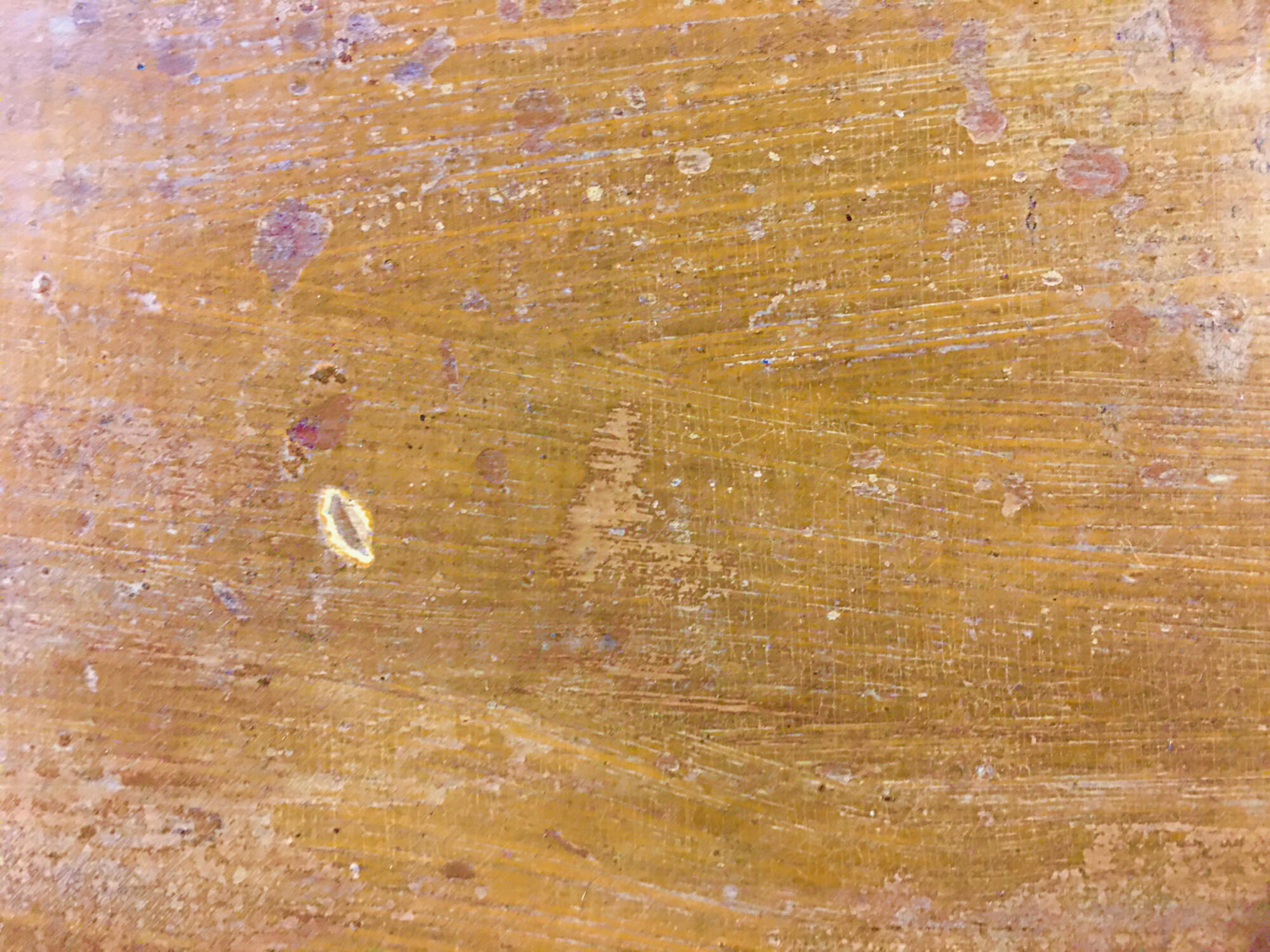
Under the many layer of white paint I came across two paint layers which DID NOT COME OFF. In the very center of this image is bare pine. Surrounding it is a kinda brown layer of paint, and then a green-ish layer. WTF?
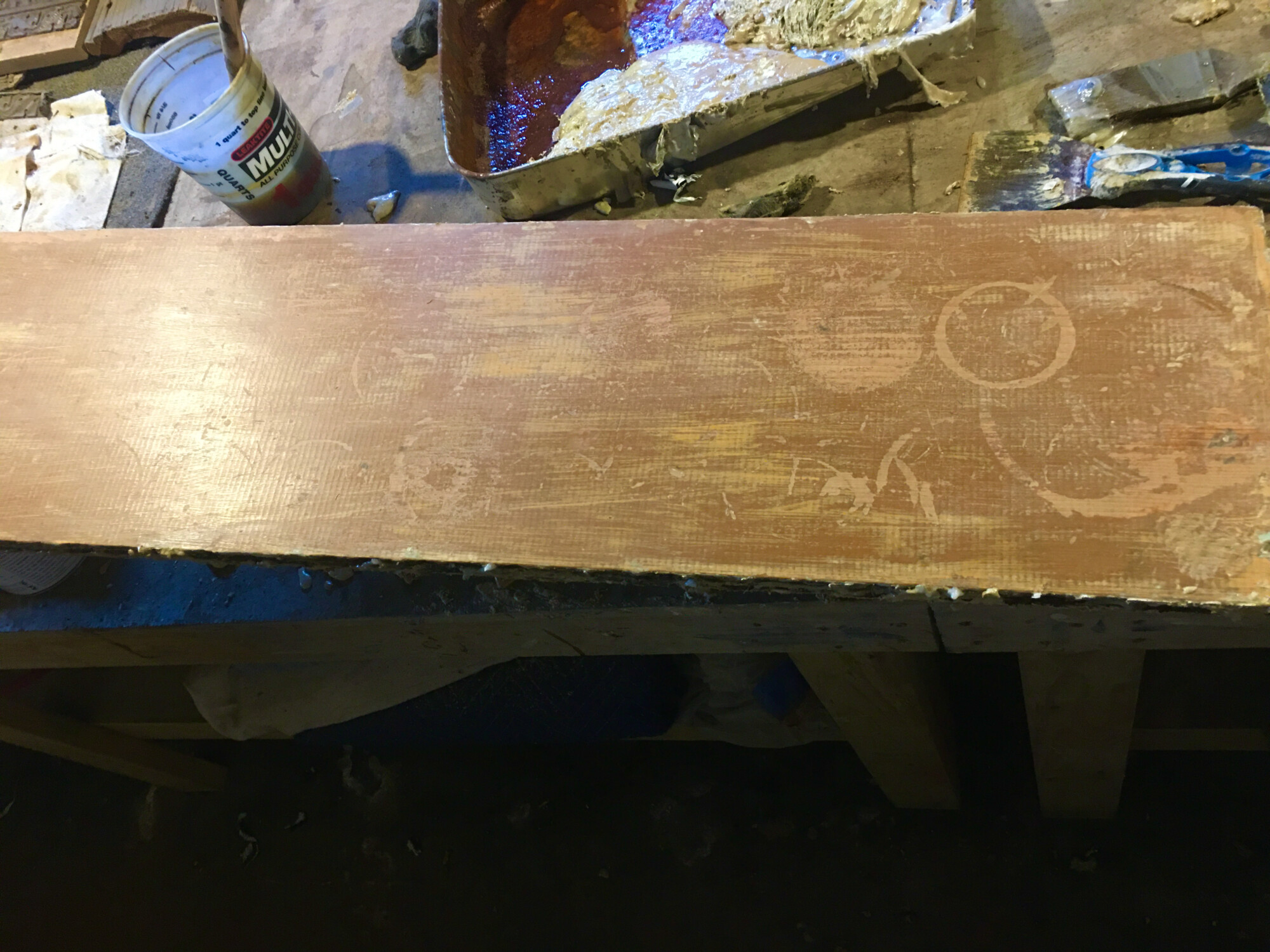
It was very obvious though that, with the white paint removed, the two layers of impregnable paint had, over time, experienced damage. WHAT had caused the two layers to dissolve? And HOW could I get my hands on this miracle solvent?
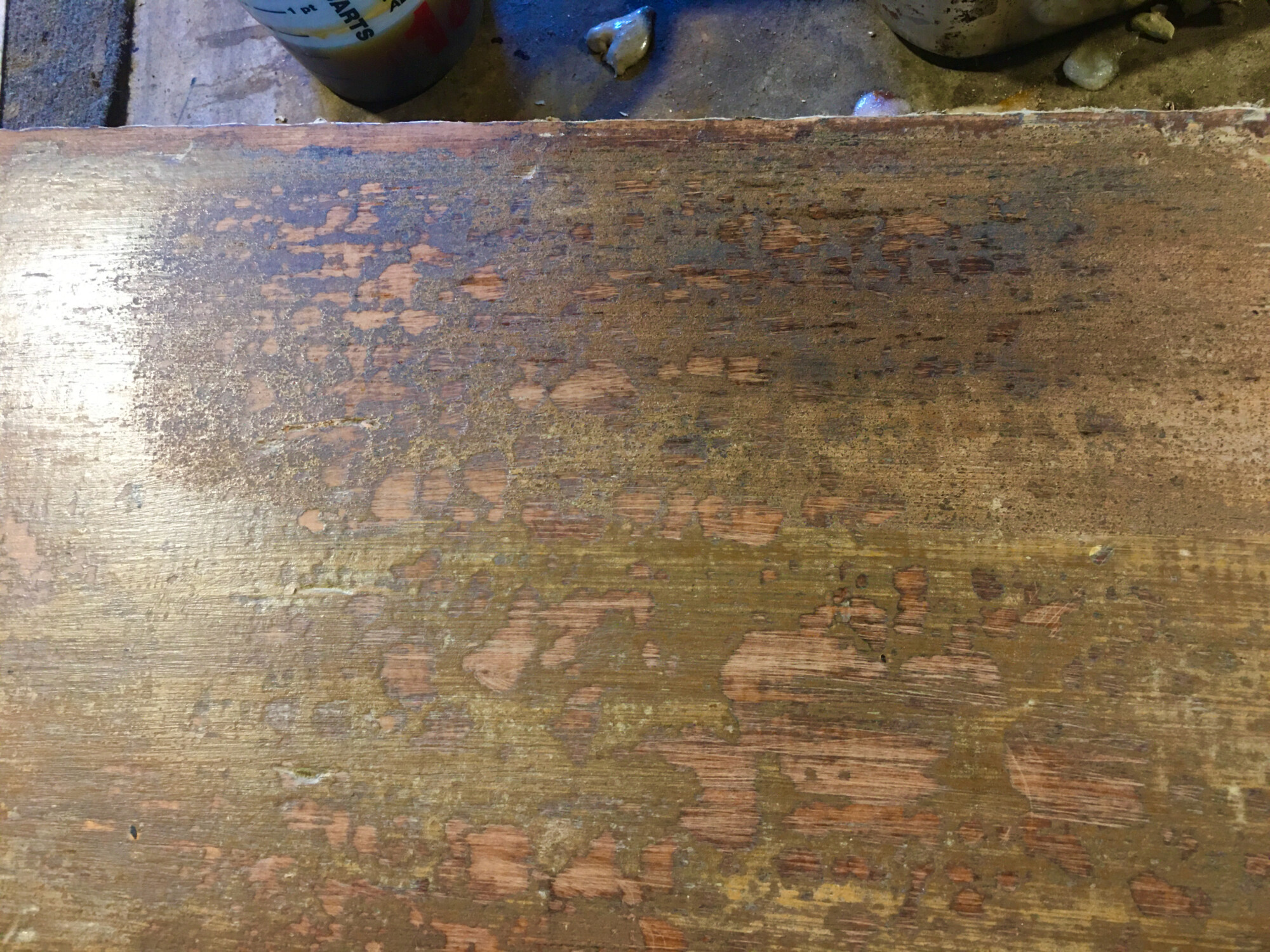
One area had these unexplained bits of loss, like meteor impacts revealing the underlying bare wood. I then tried my infrared stripper. Surely, that would work, right? Nope. It just burned the impregnable paint.
Cue Jane.
It was at this point that my frustration could only be expressed by a single word: Dash.
Yep, that’s it: Dash!
Here, with emphasis: Dash!
Sigh. This Jane analogy is just not gonna cut it as ‘dash’ sooooooo does not convey my reaction.
The ideal word is fuck.
Yep, fuck!
FUCK!
A while back, I had the kitchen analyzed and all the trim was originally an orange shellac. Basic. Simple. Just as one would expect from an 1890s kitchen.
And white paint atop shellac should come off easily.
But, where was the shellac layer?
And, why the fuck were there two layers of impregnable paint?
I then tried denatured alcohol.
Nope. Nadda reaction.
Then ammonia.
Nope. Nadda reaction.
Then…
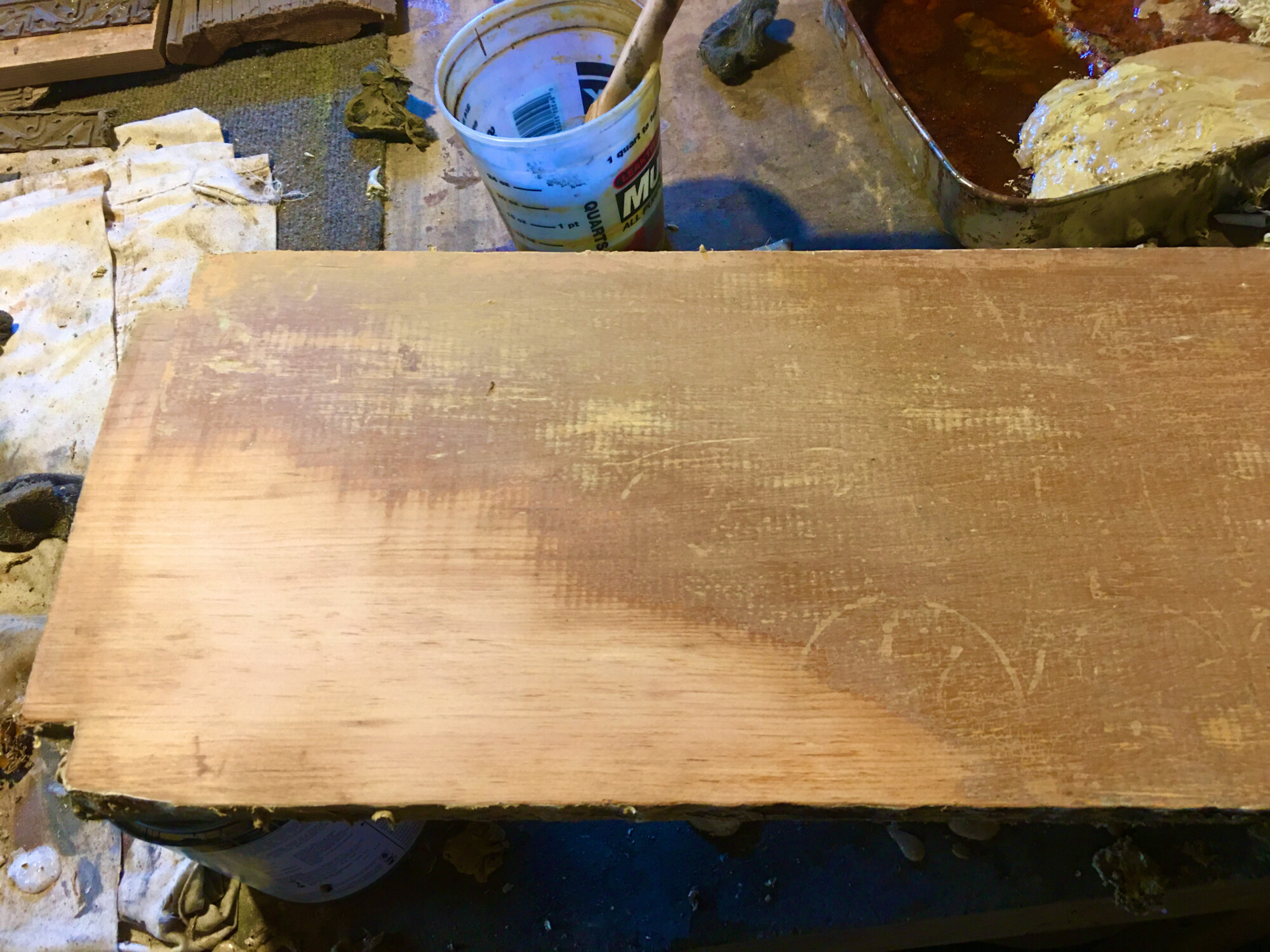
…I got ruthless, and used a disk sander. Yep! That worked! Bare wood! Ready for shellac!
Hours and hours passed. I had a nap. Then dinner. And, very slowly, a thought worked its way from the recesses of my brain and into the brilliant light of full consciousness.
Oh.
Oh.
The only place I have previously discovered impregnable paint in the Cross House regards all the faux bois trim in the house. Paint stripper and heat has zero effect on it (thank goodness) and the finish might be milk paint which is notoriously hard to remove.
Thus, while I was expecting shellac, I discovered a faux bois finish.
In the pantry.
Which means…drum roll, please…that my expectations were (cue Jane again) dashed. (Oh! Dashed works here!)
Yep, dashed.
And with expectations tossed into the trash bin, my brain was able to belatedly process the reality of what might be, actually, a significant discovery.
It seems that, no matter much of the kitchen woodwork being a simple shellac finish, the pantry shelves appear to have been given a faux bois finish in 1894.
Gadzooks!
It also seems that this finish is no where near as well done as the other such finishes throughout the house. No, the pantry faux bois is decidedly sloppy and amateurish.
What does this mean? Did the faux artist (Richard Hughes, Topeka) have an apprentice (common at the time), and was he/she given the pantry shelves to experiment on? This would make sense as only the servants would have seen the shelves.
Well, what began as quite (cue Jane) vexing has transformed into a (cue Jane) rather delightful special consideration.

8 Comments
Leave a Reply Cancel Reply
Your email address will NEVER be made public or shared, and you may use a screen name if you wish.
Is that not one of the best parts of restoring an old house… being led by little discoveries to see how the original inhabitants (or builders) might have been living or doing things at the time everything was brand spanking new? It really makes those long-gone people come to life again, at least in our heads! Was the apprentice a farm boy who was desperately trying to learn a better trade so he could marry the girl from the farm next door, back home? Did he make a go of it, or did the sloppy work get him fired and he wound up behind a mule and a plow again? (Where’s Jane when you need her… though I guess lowly paid apprentice/farm boys wouldn’t be her usual focus!)
Ross,
I have a tip for the infrared stripper. I’m not saying that this is a foolproof trick that always works but it’s easy enough to try for yourself. When using mine, I discovered that the infrared waves pass through clear finishes generating the heat in the top layer of the wood, scorching it and not the finish. Infrared doesn’t work very well on light colors like white and yellow either because they reflect some of the rays.
We were stripping some yellow boards and it wasn’t working very well at all so I tried an experiment. We had some dark green paint that was going to get anyway so I slapped it over the yellow, waited until it dried and then tried it again. The difference was night and day. I admit that this seems labor intensive but ultimately saved time, was less dangerous than liquid stripper and the green paint was going to get thrown away anyway.
The things you discover just fascinate me. Another one for the books (or the book you’ll eventually write about the house).
I love how the house keeps revealing secrets. Will you sand the shelves down, or leave what’s left after stripping? And add shellac on top?
You pondered in this vexing situation and departed from it puzzled.
Faced with a confounding problem and alas you were able to make a wonderful discovery indeed!
Turning a George Wickham vexation into a wonderful Fitzwilliam Darcy discovery!
Channeling beloved Jane who would be truly delighted for dearest Ross!
You say miracle solvent, I say lacquer thinner.
Wow – only you would find a mystery and a solution! Simply amazing! Another pat on the back. 🙂
All the doors I’ve restored in my 1880’s home have been covered in milk paint. The only thing that has worked for me is a belt sander and sand paper.